
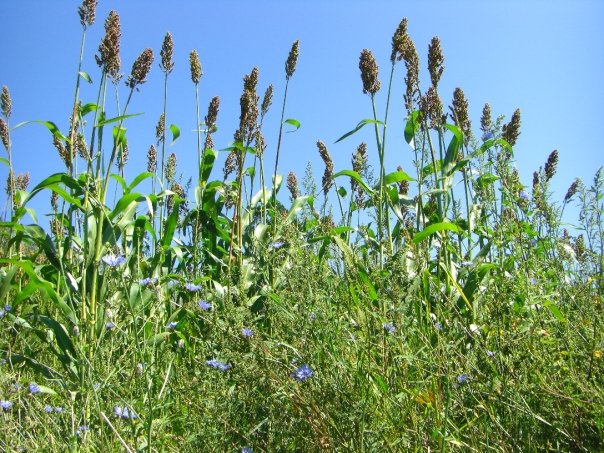
For generations in Sugar Grove, the Combs family has carried forward a tradition that is as much about community and memory as it is about food. Making molasses was never a quick task or a solitary one — it was a season, a rhythm, and a ritual. Each step, from planting cane to sealing jars of molasses, reflects knowledge passed carefully and meticulously from one generation to the next.
This is the story of how the Combs family makes molasses in the heart of Rye Valley, using tools, seeds, and methods that have endured for generations.
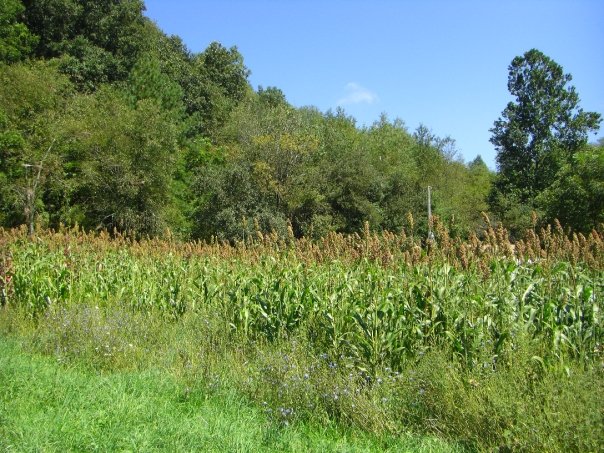
Every batch of molasses begins long before the fire is lit under the pan. It begins in the cane patch — a field planted with seed saved from the previous year’s crop. This seed‑saving tradition is one of the most remarkable aspects of the process.
Sherman Combs, Jr. played a central role in this cycle. After the cane matured, he would walk the rows, selecting the best cane heads and carefully topping them in the harvesting process to collect seed. These seeds weren’t just agricultural material; they were heirlooms. Each year’s planting carried the genetics — and the memories — of many seasons and generations before it.
This practice of “topping” the cane, gathering the heads, and saving seed ensured a consistent reliable crop, a lineage of cane adapted to Sugar Grove’s soil and climate and a direct connection between generations of farmers.
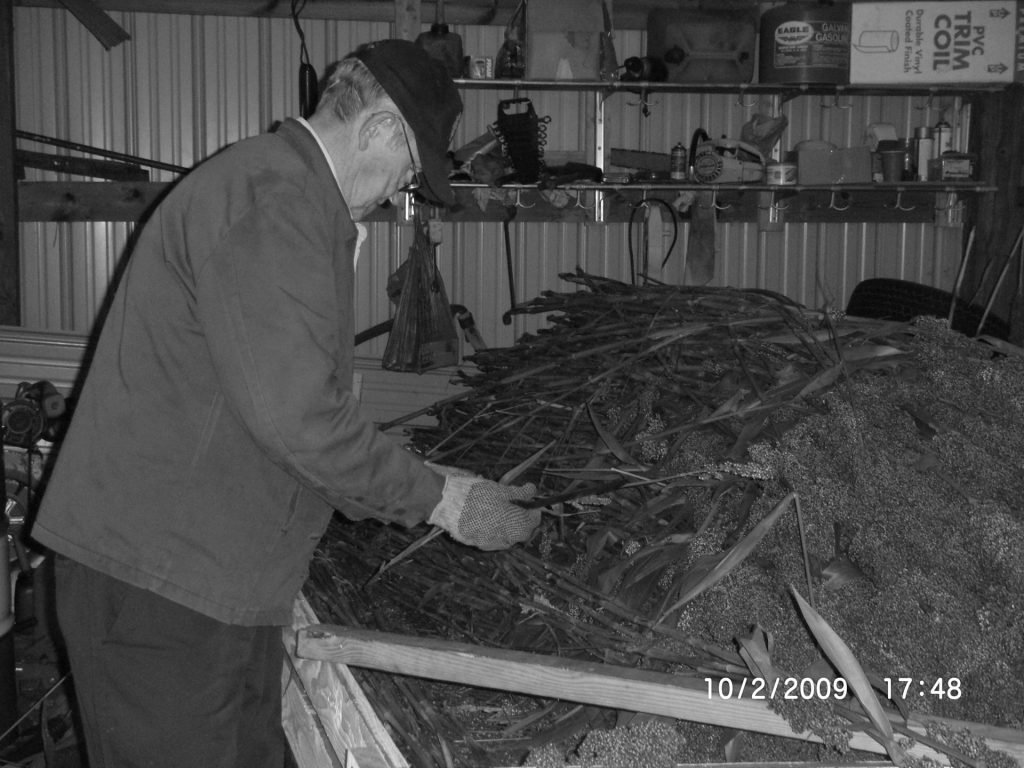
Gayle Combs, the family patriarch, is shown in this photo going through the heads of the cane gathering the seeds to store for the next planting. Seeds can be stored for several years if kept dry and cool. They are usually stored in an old glass jug to prevent any moisture or other foreign matter from coming in contact with them assuring their quality. The jug has been around also for many generations.
Before any cane juice could be boiled, the custom molasses pan had to be prepared — a process that required both craftsmanship and patience. The pan is hand made and custom designed for the cane furnace using its specific measurements.
The pan, typically a long, shallow metal trough, was fitted around a wooden frame. To ensure a tight seal, the pan was filled with water. As the wood absorbed moisture, it expanded, tightening around the joints and preventing leaks. Any small gaps or imperfections revealed during this stage were addressed before the pan ever touched the furnace and before any cane juice is put into it.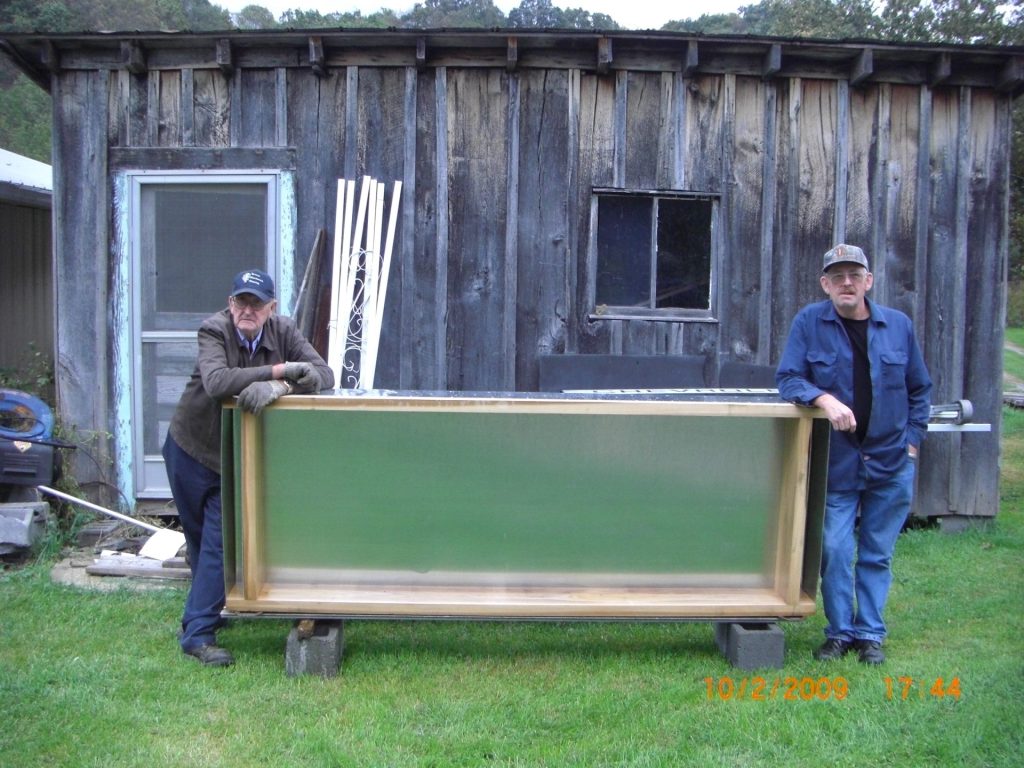
This step is essential. A leaking pan could ruin hours of labor and waste precious cane juice. This preparation is treated as seriously as the cooking itself.
The cane furnace — used not only for molasses but also for apple butter — is one of the most enduring pieces of family history. Built from stone and brick, it was designed to hold heat evenly and support the heavy molasses pan. The cane furnace is a rectangular structure built on top of the ground to form a box to contain the fire. it has a smokestack and slats across the top for added support of the pan when it is placed. The cane furnace sits under a pole shelter for added protection from weather and other elements. If it rains or is too windy, tarps can be added between poles for added protection from the weather.
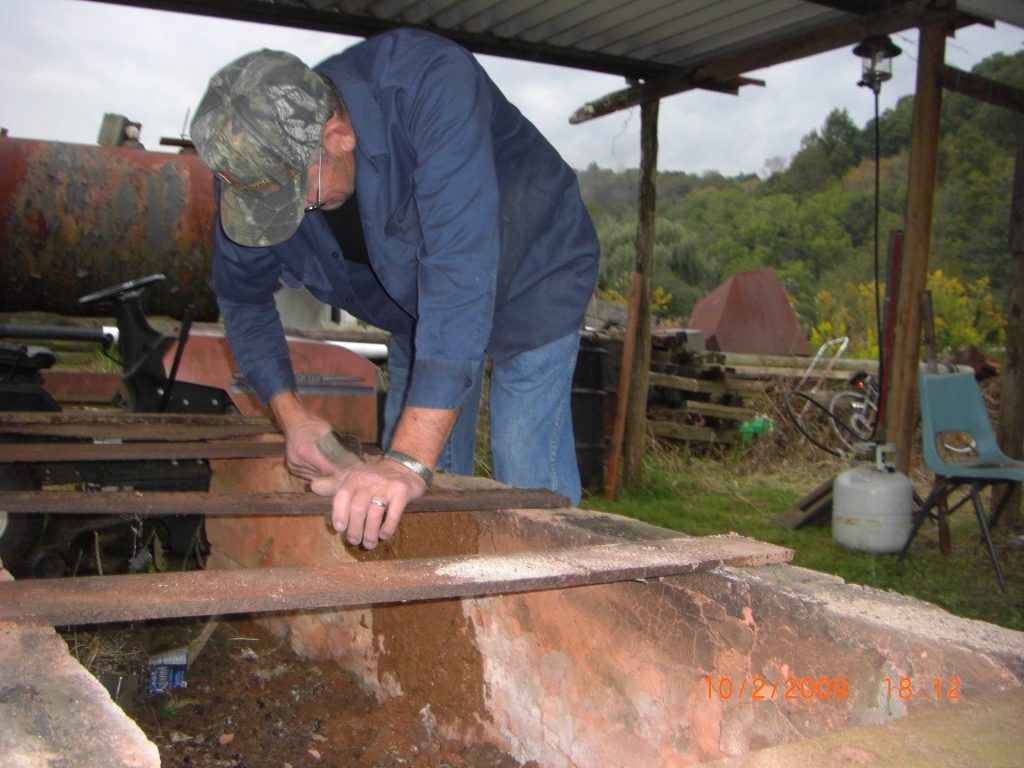 Before each use, the furnace has to be “mudded.” This means sealing the edges of the pan with a clay‑like mixture to prevent leaks, keep smoke and ash out of the molasses and ensure the pan heats evenly from end to end.
This furnace isn’t just equipment; it is a landmark. Generations have gathered around it, 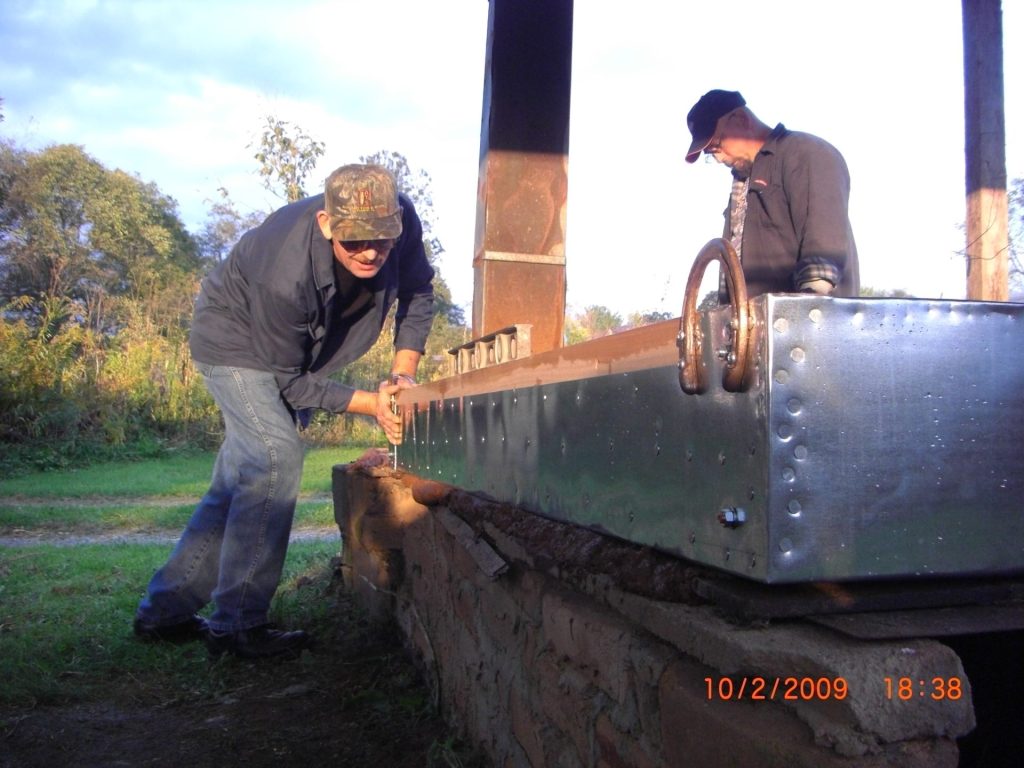 stirring, skimming, talking, and working before first light until sunset. Once the cane furnace is properly made ready for the next molasses making event, the pan is placed carefully on fresh mud so that it forms a seal.
Once the cane is harvested, the stalks are fed through a cane mill — a heavy, gear‑driven press that squeezes out the juice. The mill was often powered by hand, mule, or tractor, depending on the era. In modern times, a tractor is used to power the cane mill.
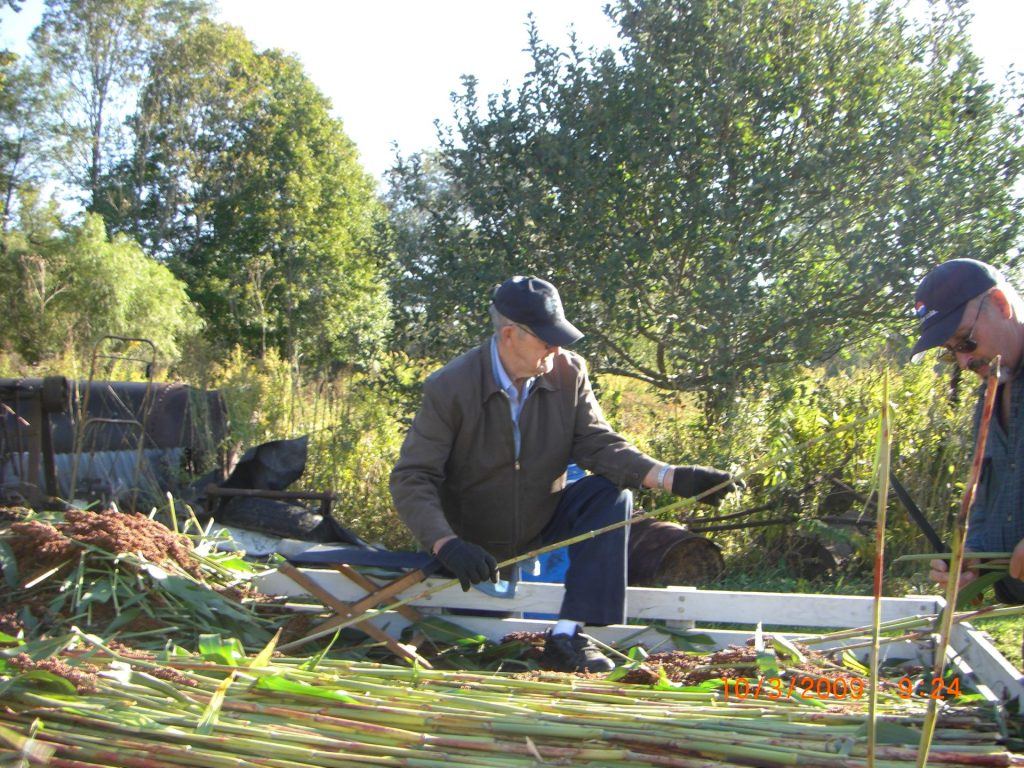 As the stalks are crushed, the juice flows into a cloth strainer. This first filtration removed dirt, bits of cane plant matter, leaves and any other debris from the field.
A fine, clean cloth sack is used for straining for this step, ensuring the juice entering the pan from the cane mill was as pure and clean as possible.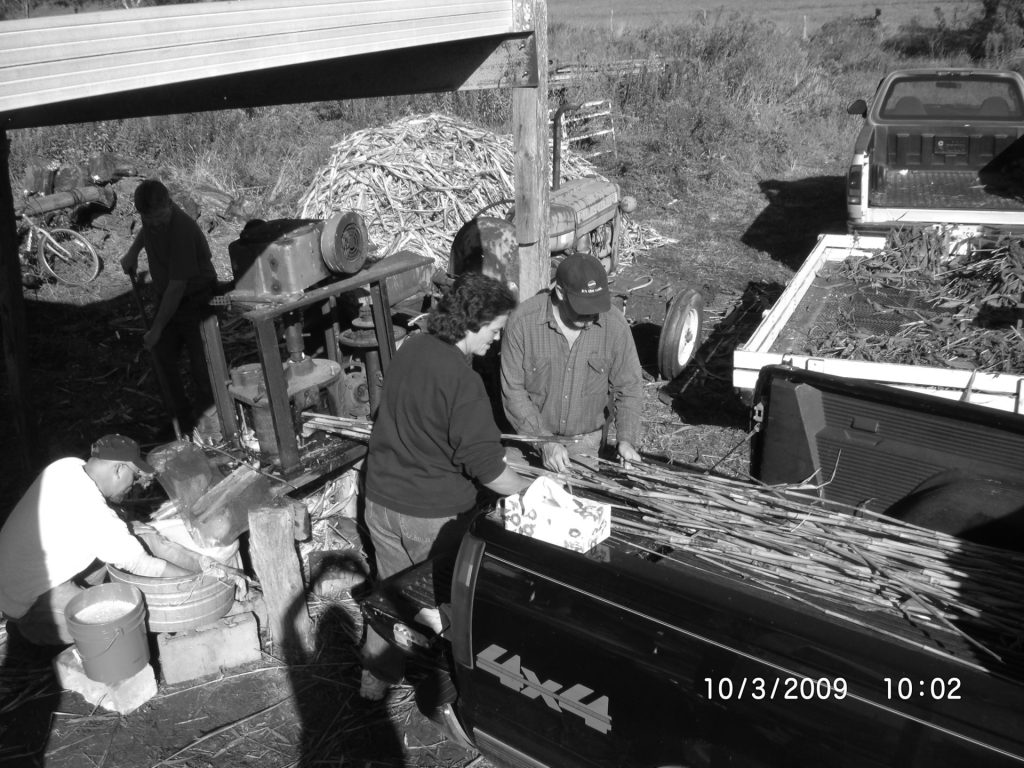
With the furnace hot and the pan sealed, the strained cane juice is poured in. This began the longest and most labor‑intensive part of the process: boiling the juice down into molasses. During this process, about half of the juice is lost to evaporation and skimming that renders a base product which becomes molasses.
This stage could last many hours, often from early morning until sunset. Throughout the day, family and neighbors take turns feeding the fire, watching the boil, skimming and discarding skimmings into a nearby 5 gallon bucket. Skimmer tools are handmade from an old broom handles and metal that is hand crafted into a square scoop shape. the scoop has rows of holes so that liquid can flow through but the thicker foamy substance that rises to the surface does not pass through these holes and is discarded. These skimmers are used constantly throughout most of the process of making molasses. This process is performed along both sides of the pan for efficiency and turns are usually taken in the process by everyone.
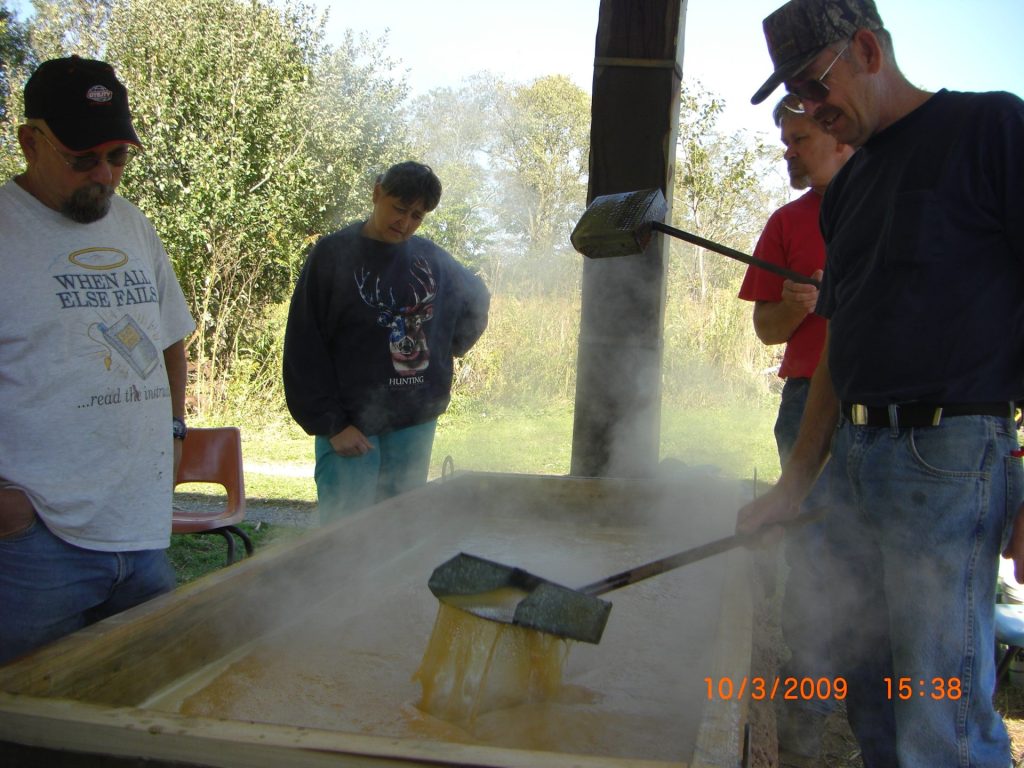 The color slowly deepens from pale green to a beautiful golden amber. The aroma — sweet, earthy, unmistakable — drifts across the yard permeating your clothes, your hair and any other material things you have while infusing everything with the scent of wood smoke mingled with molasses. It’s a unique scent only attained from this process.
This was work, but it was also fellowship. Stories were told, children played nearby, and the furnace became a gathering place. Potatoes bake near the smoke stack, hot dogs are roasted, other food items are brought out in a pot luck family style picnic to be served off a nearby table.
When the syrup reaches the right consistency, temperature and color, the pan is removed from the furnace by running a couple of pipes through the horse shoes that have been made onto the sides to act as loops for lifting the pan. This requires breaking the mud seal and lifting the hot boiling pan onto nearby sawhorses.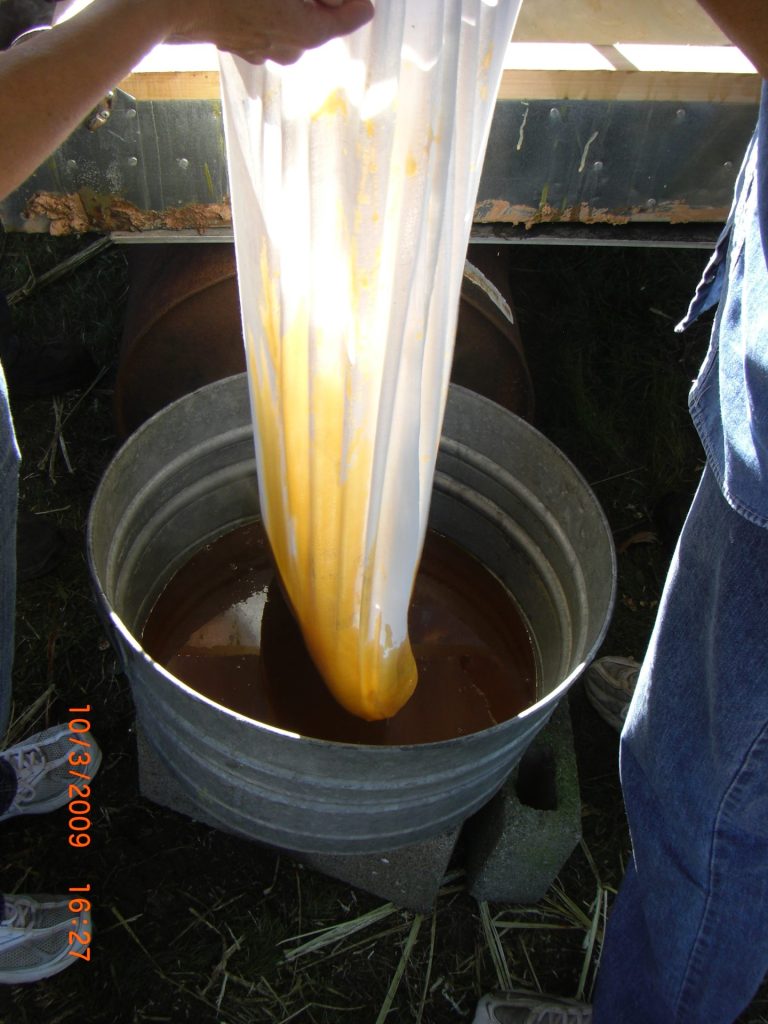
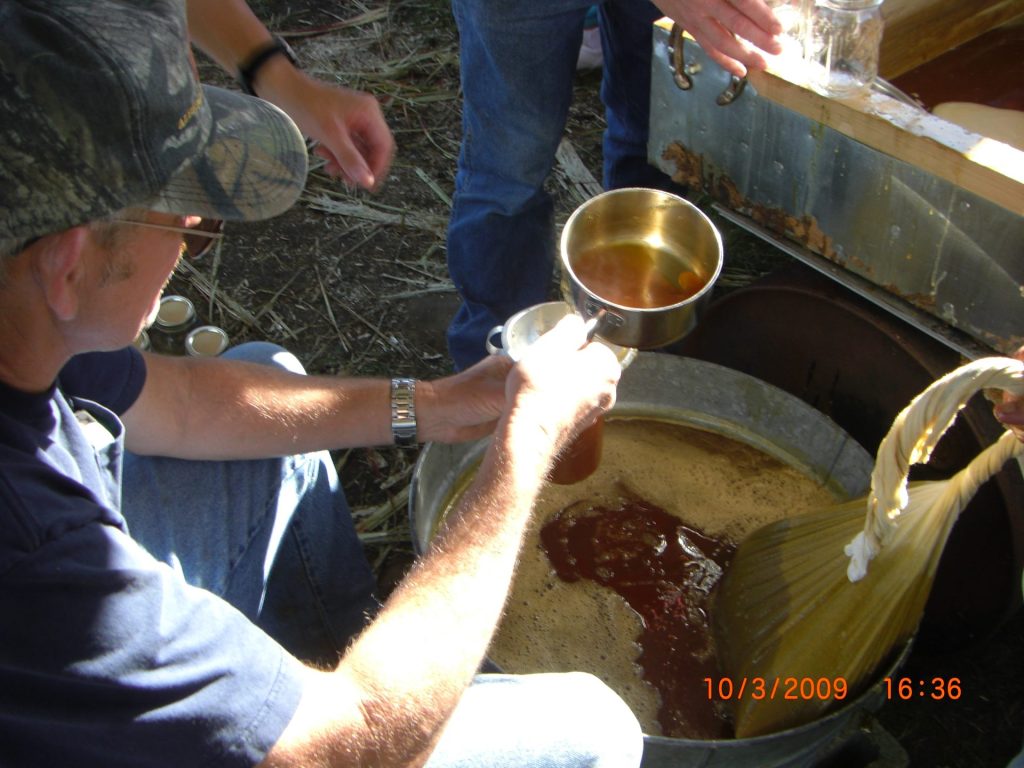
Before the molasses can be canned, they go through a second skimming straight out of the pan, again using a fine cloth sack. This final filtration ensured a clean, smooth product free of any grit, plant matter or cinders that may have transferred into the pan throughout the day.
Once strained, the final product is poured into jars and sealed — the final step in a process that had begun months earlier in the field.
These jars weren’t just food or a condiment. They are the product of tradition, labor, and love. These molasses are a unique product of Sugar Grove, locally grown, rendered and preserved.
 The Combs family’s molasses‑making tradition is more than a method; it’s a story of continuity. From ancestors saving seed heads to the final pour of golden syrup, each step reflects a deep connection to land, family, and community. The art of molasses making has, for generations, been a communal tradition. it typically involves many family members, some friends and neighbors and even those who travel from afar such as a professor from Radford University who visited to participate and learn about the process for a course in Appalachian Studies that the university would offer.


