Rye Valley History

Tag: Rye Valley

Molasses Tradition in Sugar Grove: A Generational Craft
Molasses Tradition in Sugar Grove: A Generational Craft

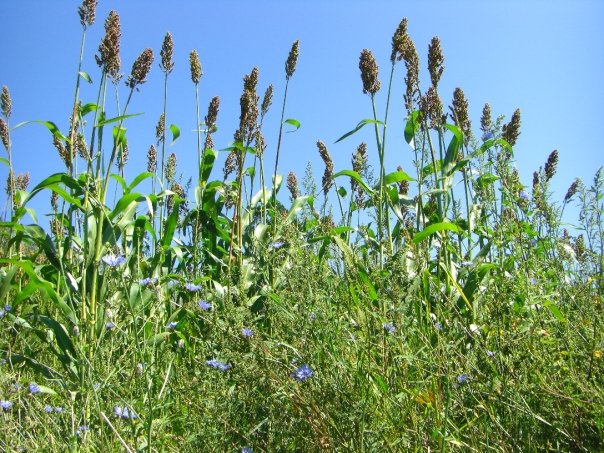
For generations in Sugar Grove, the Combs family  has carried forward a tradition that is as much about community and memory as it is about food. Making molasses was never a quick task or a solitary one — it was a season, a rhythm, and a ritual. Each step, from planting cane to sealing jars of molasses, reflects knowledge passed carefully and meticulously from one generation to the next. This is the story of how the Combs family makes molasses in the heart of Rye Valley, using tools, seeds, and methods that have endured for generations. Every batch of molasses begins long before the fire is lit under the pan. It begins in the cane patch — a field planted with seed saved from the previous year’s crop. This seed‑saving tradition is one of the most remarkable aspects of the process. Sherman Combs, Jr.  played a central role in this cycle. After the cane matured, he would walk the rows, selecting the best cane heads and carefully topping them in the harvesting process to collect seed. These seeds weren’t just agricultural material; they were heirlooms. Each year’s planting carried the genetics — and the memories — of many seasons and generations before it. This practice of “topping” the cane, gathering the heads, and saving seed ensured a consistent reliable crop, a lineage of cane adapted to Sugar Grove’s soil and climate and a direct connection between generations of farmers. Gayle Combs, the family patriarch, is shown in this photo going through the heads of the cane gathering the seeds to store for the next planting. Seeds can be stored for several years if kept dry and cool. They are usually stored in an old glass jug to prevent any moisture or other foreign matter from coming in contact with them assuring their quality. The jug has been around also for many generations.   Before any cane juice could be boiled, the custom molasses pan had to be prepared — a process that required both craftsmanship and patience. The pan is hand made and custom designed for the cane furnace using its specific measurements. The pan, typically a long, shallow metal trough, was fitted around a wooden frame. To ensure a tight seal, the pan was filled with water. As the wood absorbed moisture, it expanded, tightening around the joints and preventing leaks. Any small gaps or imperfections revealed during this stage were addressed before the pan ever touched the furnace and before any cane juice is put into it. This step is essential. A leaking pan could ruin hours of labor and waste precious cane juice. This preparation is treated as seriously as the cooking itself. The cane furnace — used not only for molasses but also for apple butter — is one of the most enduring pieces of family history. Built from stone and brick, it was designed to hold heat evenly and support the heavy molasses pan. The cane furnace is a rectangular structure built on top of the ground to form a box to contain the fire. it has a smokestack and slats across the top for added support of the pan when it is placed. The cane furnace sits under a pole shelter for added protection from weather and other elements. If it rains or is too windy, tarps can be added between poles for added protection from the weather. Before each use, the furnace has to be “mudded.” This means sealing the edges of the pan with a clay‑like mixture to prevent leaks, keep smoke and ash out of the molasses and ensure the pan heats evenly from end to end. This furnace isn’t just equipment; it is a landmark. Generations have gathered around it, stirring, skimming, talking, and working before first light until sunset. Once the cane furnace is properly made ready for the next molasses making event, the pan is placed carefully on fresh mud so that it forms a seal. Once the cane is harvested, the stalks are fed through a cane mill — a heavy, gear‑driven press that squeezes out the juice. The mill was often powered by hand, mule, or tractor, depending on the era. In modern times, a tractor is used to power the cane mill. As the stalks are crushed, the juice flows into a cloth strainer. This first filtration removed dirt, bits of cane plant matter, leaves and any other debris from the field. A fine, clean cloth sack is used for straining  for this step, ensuring the juice entering the pan from the cane mill was as pure and clean as possible. With the furnace hot and the pan sealed, the strained cane juice is poured in. This began the longest and most labor‑intensive part of the process: boiling the juice down into molasses. During this process, about half of the juice is lost to evaporation and skimming that renders a base product which becomes molasses. This stage could last many hours, often from early morning until sunset. Throughout the day, family and neighbors take turns feeding the fire, watching the boil, skimming and discarding skimmings into a nearby 5 gallon bucket. Skimmer tools are handmade from an old broom handles and metal that is hand crafted into a square scoop shape. the scoop has rows of holes so that liquid can flow through but the thicker foamy substance that rises to the surface does not pass through these holes and is discarded. These skimmers are used constantly throughout most of the process of making molasses. This process is performed along both sides of the pan for efficiency and turns are usually taken in the process by everyone. The color slowly deepens from pale green to a beautiful golden amber. The aroma — sweet, earthy, unmistakable — drifts across the yard permeating your clothes, your hair and any other material things you have while infusing everything with the scent of wood smoke mingled with molasses. It’s a unique scent only attained from this process. This…

Combs, Communities, Families, History, Sugar Grove

Dr. Goodridge Wilson On Our History

Dr. Goodridge Wilson On Our History

Early Settlers Were Attracted to Smyth County’s Rye Valley Rye Valley lies over the mountain to the south of Smyth County. State Route 16, the B. F. Buchanan Highway, coming from the north over Clinch, Brushy, and Walker mountains, passes through Hungry Mother Park, Marion, and Attaway, over another Brushy Mountain, and enters a locality where rye was growing in abundance when the first white men came to this region. That weed is smaller than the cultivated rye but resembles it, and is said to make fairly good horse and cattle food. The pioneers seemed to have liked the plant, perhaps because it grew so well here. Prior to or during the Revolutionary War they gave it its name not only the beautiful valley where the South Fork of Holston starts but also to Rye Bottom on Big Walker Creek, and to Rye Cove in Scott County. The valley is narrow. The high crosses it quickly at a little climbing the steep sides of Iron Mountain and on across Grayson County to North Carolina. The first pioneers who acquired land in Rye Valley appear to have been Joseph and Esther Crockett, enterprising land speculators, who were not husband and wife, but business associates whose names appear together on a number of documents. The late Squire Robert Ward of Sugar Grove, a descendant of one of them, showed me a deed dated in 1753 by which the king of England conveyed the land about the head springs of the South Fork of Holston to Joseph and Esther Crockett. Mr. Ward’s name was included in that grant. His grandfather, a Rev. Crockett, bought it from a James or a Nelson, Joseph and Esther Crockett, or their heirs, had sold the original tract to some families in Virginia and to Nelson families who came from Virginia and they became the first actual settlers in the iron region where three mountain brooks join their waters with those of a number of bold springs in level meadows to form the South Fork of Holston. Two of the brooks, Dickey’s Creek and Cress Creek, come out of Iron Mountain, and the third, Slemp Creek, tumbles into the valley from Brushy Mountain. In this valley meadows a forest of fine sugar maple trees grew. While I was living in Marion back in the 1920s and 30s I would go there sometimes to fish for trout, to visit in some homes, or to conduct a religious service in a public school. At that time two splendid groves, remnants of that ancient maple forest, provided wonderful picnic grounds and ideal places for all-day gatherings as Baptist Association meetings. They gave the community its name, Sugar Grove. Now the groves are gone, and much beauty formerly belonging to this place of many waters faded with the passing of those great trees. Perhaps the first permanent settler in Rye Valley was Jenkins Williams, who settled on land downstream from and immediately adjoining the original Joseph and Esther Crockett survey. When I lived in Marion his descendants in the seventh generation were living on that land. When I went to Marion one of them, a lad in knee pants, lived with his widowed mother across the street from me. He now lives in Richmond and is well known over the state as Robert Williams, executive secretary of the Virginia Education Association, a well-authenticated fact, who made his home here since 1754 when rescuers were trailing marauding Indians and found the dead body of Mrs. Samuel Stalnaker beside a creek, with her infant child crying “Hungry Manny,” they went to warn the family of a settler near the site of Sugar Grove, and left the child with that family. That settler may have been Jenkins Williams. In 1776 John Griffiths came from Pennsylvania and settled in Rye Valley. When I made a sightseeing tour in that section a few weeks ago, B.H. Griffiths of Marion went with me. He was born and grew up with his father’s name in a house that stands on the site of a log house in which the Griffiths settle of 1776 lived. Among other things he showed me some skillful doing masonry work and some lengths of old iron water piping, on a hillside above the South Fork of Holston. These are the remnants of a lead mining and smelting operation conducted there around the turn of the century. An iron working industry was started in Rye Valley early in the pioneer period. Jenkins Williams had a forge on the South Fork in which, among other items, he manufactured barrels for rifles used by Revolutionary War soldiers. A Pierce family engaged in iron working in the valley through successive generations. The Rev. Lewis Wetzel Pierce, a Methodist minister widely known throughout Southwest Virginia as a pastor of churches and as a former agent for the Children’s Home Society of Virginia, is now retired and lives in Bristol. He says that his great-grandfather, Moses Pierce, a Quaker, came from North Carolina and established   an iron   forge near the mouth of Comers Creek. His grandfather and his father were iron workers at Sugar Grove, He was born on inherited a farm located on the west side of Slemp Creek, which his grandfather bought from Jonathan Slemp. The Slemp’s, Frederick and Jonathan acquired land on the south side of Brushy Mountain in 1804. Mr. Pierce says that Jonathan’s land was on the west   side of the mountain between Crockett and Frederick’s on the east side. Frederick stayed and his descendants are still in that section. Jonathan sold his land to Alexander Wilson Pierce and his descendants, Col. Camp, who represented that area in Congress from the 9th Virginia District. The Brushy Mountain land is still called Slemp’s Creek.  

Communities, Crockett, Families, Genaology, Griffitts, History, History Keepers, James, Native American, Nelson, Pierce, Roberts, Stories, Sugar Grove, Teas, Ward, Williams

The History Keepers- Sena Roberts-Ward

The History Keepers- Sena Roberts-Ward

“The History Keepers” is a special series on our website dedicated to honoring those who have preserved and chronicled the stories of our region. Through their writings, collections, and memories—sometimes shared directly, sometimes lovingly submitted by their families—we celebrate the voices that have safeguarded our local heritage. One such voice belongs to Mrs. Sena Roberts-Ward. If you’re from this area, you likely knew her, heard her name spoken with respect, or admired the graceful mill she restored and tended in Sugar Grove—a quiet sentinel that still reminds us of our heritage. Mrs. Ward lived 94 remarkable years, bridging generations and bearing witness to much of the history we now study and remember. Her life overlapped with elders who themselves had lived through even earlier chapters of our community’s story. Her lineage traces directly to several of the pioneer families who settled the Rye Valley, and her deep knowledge of that legacy was matched by her high academic achievements and meticulous care for detail. We are especially grateful for the writings, photographs and memories she left behind—many of which remain unpublished, yet hold invaluable insights into our shared past. Her work is a gift to all of us, and through this series, we hope to bring it to light, honoring her dedication and the enduring spirit of those who keep history alive.  Sena Roberts-Ward was one of many who have posthumously contributed to this research and compilation of the History of the Rye Valley and here is her story transcribed from documents found in her own collection: Sena Narcissus Roberts was born February 26, 1901 in Flat Ridge, the first child of Adam Batey and Laura Elizabeth Jennings-Roberts, and the first grandchild of Charles Lafayette Jennings of Camp. She was joined by two brothers, Wiley Winton and Charles Maurice. The family grew up in Grayson and Smyth Counties. She was a graduate of Berea College in Kentucky, and did graduate work at the University of Virginia. She was one of the early home demonstration agents of Kentucky and taught high school and home economics in Mullens, WV. In 1932 she married Clarence John Ward and they were parents of two daughters, Laura Frances and Elizabeth Lavinia. She was the home economics teacher at William Flemming High School in Roanoke, and then operated the Hamm-Roberts Mill in Sugar Grove. In 1968 she retired from the Southwestern State Hospital as a dietitian and returned to Sugar Grove, where she did substitute teaching. With help from many friends, neighbors and relatives, she ran the family farm for several years. Her interests included a wide range of farming activities, from raising cattle to making molasses. She made a study of genealogy of her own family as well as others. She had a special fondness of country living, and her warm, wonderful friends and neighbors were a source of help and comfort to her during her declining hears. Although she saw several generations, she was always especially delighted with the newest generation. She maintained a joy of living almost until the very end. *We would like to extend a special thank you to Elizabeth Ward-Allison and her family for these contributions. **Photos from the Sena Roberts-Ward collection

Business, Camp, Education, Families, Genaology, History, History Keepers, Mill, Roberts, Ward

Stirring Tradition: The Art of Making Apple Butter

Stirring Tradition: The Art of Making Apple Butter

In the heart of Southwest Virginia, the quiet community of Sugar Grove, the Combs Family keeps a rich Autumn Appalachian tradition alive: the making of apple butter. This slow-cooked, spiced spread is more than just a seasonal delicacy—it’s a symbol of heritage, hard work, and togetherness of families and neighbors. For generations, churches, families and neighbors in Sugar Grove have gathered around copper kettles, often before dawn, to stir previously peeled and sliced apples over open wood fires, sharing stories and passing down techniques as old as the mountains themselves. Apple butter making in this region dates back to the early settlers who relied on preserving fruits to last through the harsh winters. What began as a necessity eventually became a celebrated tradition, with church groups, neighbors, visitors, and family farms organizing this activity each Fall. These events are part work, part festival, featuring laughter, music, and the comforting aroma of cinnamon and firewood filling the crisp mountain air. Today, making apple butter in Sugar Grove is as much about preserving a way of life as it is about preserving apples. Whether sold at local markets or ladled into jars for holiday gifts, each batch carries with it a sense of place and history that only Southwest Virginia can offer. What Does The Process Look Like? On a crisp October morning in Sugar Grove, Virginia, the valley hums with the low crackle of a hardwood fire and the rhythmic scrape of a wooden stirrer against copper. It’s apple butter day at the Combs family homeplace, and that means more than just cooking—it’s a gathering of generations, neighbors, and even curious visitors drawn by the promise of rich tradition and the sweet scent of spiced apples hanging in the cool and still misty, very early morning mountain air. The process is usually underway by 4AM. A pole structure, open on two sides and draped with a heavy tarp to block the wind on one, sometimes two sides, shelters the heart of the operation: a weathered “cane furnace” fueled by hand-split oak logs. The hardwood burns hot and steady, heating a gleaming copper kettle that’s been cleaned and set in place since before dawn. Within it, bushels of peeled apples—often Wolf River or another available locally grown variety—have been simmering for hours. The apples slowly break down, to the rich, deep brown of true Appalachian apple butter.. At the center of the kettle stands a stirring stick, worn smooth by decades of use and lovingly passed down by Grandad Combs. This stirrer has been passed down through the family, and today, a younger member of the Combs family keeps the rhythm going, arms steady as they guide the long handle around and around. “Don’t stop stirring,” someone calls out with a grin—one of many reminders passed along with the craft. What happens if you stop stirring? The copper kettle scorches on the bottom.  The kettle must be constantly stirred to prevent this costly mistake. Around the fire, a circle begins to form. camp chairs, cinder blocks, and a few other things provide makeshift seating as family and friends gather closer to stay warm. The picnic table is moved over near the cane furnace, Potatoes wrapped in foil roast slowly over heat nearby, filling the air with an earthy, comforting aroma. As the sun climbs higher, casseroles, crock pots, and dessert trays begin to appear on picnic tables—homemade dishes brought by neighbors and friends in true potluck fashion. There’s cornbread, slow-cooked beans, and pies of every kind. There are usually hot dogs to roast over the fire at the other end of the cane furnace as well.  It’s a feast earned by patience and fueled by fellowship. What Exactly Is This “Cane Furnace?” The cane furnace is a brick rectangular structure standing at a height of about 2 feet that we also use in the process of making molasses with a large rectangular pan. The brick foundation is mudded and provides a place to build a fire under the whole pan to cook cane juice all day. There is a smoke stack to carry smoke up through the roof and away from the work area. When we use this for apple butter making, we do not use the entire length of it and cover it except for a cut out that we have for the kettle so that we still get the use of the smoke stack and use the covered surface for baking potatoes and the fire for roasting hot dogs. Visitors Throughout the day, visitors drop by—some from nearby, others from out of state, drawn by memory or curiosity. They’re welcomed with a variety of food options, a chair, and often a story or two. Here in Sugar Grove, making apple butter isn’t just about the end product. It’s about the fire, the food, the stories, and the stirring—together. There is a LOT of stirring!  Over the years, we have hosted many guests, some were content creators who produced an entire documentary about Appalachian Life focusing on our apple butter making and others from as far away as New York! Our family’s old time apple butter making has been the subject of the Appalachian Studies curriculum at Radford University and has provided many with insight into the culture and heritage of Southwest Virginia’s people. Some of the lucky ones even get to take a jar or two home with them! The Day Continues… As the day wears on, the kettle’s contents darken and thicken, transforming from tart apple pulp into a silky, spiced spread with just the right balance of sweetness, spice and tang as cinnamon and sugar are gradually added. Every so often, several elder family members tests a small spoonful on a saucer, and nodding in quiet approval. “Almost there,” they say, the phrase echoing like a ritual. The patience is part of the process, part of what makes the end result so special. Rushing isn’t an option when it comes to good apple butter. Grandad, while he…

Combs, Communities, Families, History, Resources, Sugar Grove

Abijah Thomas and Holston Mills

Abijah Thomas and Holston Mills

The Rise and Fall of Holston Mills: A Historic Textile Town In 1844, industrialist Abijah Thomas made a significant investment in a 344-acre tract of land, complete with a sawmill and grist mill, in what would later become the town of Holston Mills. This land was nestled within a growing area that would become the heart of a bustling industrial hub during the 19th century. By the early 1860s, Thomas, along with a business partner, founded the Holston Woolen Factory, marking the beginning of the town’s rise as a textile center. The Holston Woolen Factory became a major producer of textiles, particularly wool, and played an integral role in the local economy. The village that grew around the factory adopted the name Holston Mills, a nod to the success and importance of the textile mill in the region. The town’s growth was not limited to the mill itself; as the factory flourished, so did the surrounding community. Residential areas, shops, and services began to spring up, creating a vibrant, self-sustaining village. The Impact of the Civil War During the American Civil War, Holston Mills found itself at the center of wartime industry. The village became the site of Co. A of the 23rd Battalion of the Virginia Infantry, and the woolen mill played a crucial role in supporting the Confederate war effort. The factory produced textiles for Confederate uniforms, contributing to the logistical needs of the Southern army. This connection to the war effort highlighted the strategic significance of Holston Mills, not just as a community, but as an essential manufacturing hub during one of the most tumultuous periods in American history. However, following the end of the Civil War, the mill and the town faced challenges. The industry was left dormant for a time, and the post-war years proved difficult for many Southern communities, as they struggled to recover from the destruction of the war. But Holston Mills would not remain stagnant for long. A New Era of Prosperity In the years following the Civil War, the Holston Woolen Factory saw a revival. In 1875, new ownership took over the mill, marking the beginning of a period of renewed prosperity for the town. With fresh investment, the mill, now known as Holstein Woolen Mills, began to expand once again. This resurgence allowed Holston Mills to grow into a fully developed village, with a school, shops, a post office, and a telegraph office. The mill and the infrastructure surrounding it helped solidify the town’s status as a thriving industrial community in the late 19th century. The new owners were instrumental in modernizing operations at Holstein Woolen Mills, ensuring that it remained competitive in a rapidly changing industry. As the town’s population grew, so did the demand for services, and Holston Mills became an attractive place for workers and families looking for employment opportunities in the textile industry. The Decline of Holston Mills However, as with many industrial towns, the fortunes of Holston Mills would eventually shift. In the early 1890s, Holstein Woolen Mills relocated to Salem, marking the beginning of the village’s decline. Without the mill as the central driving force of its economy, the town began to lose its former vibrancy. The population dwindled as people moved away in search of new opportunities, and the shops, post office, and other services that had once been vital to the community fell into disuse. Over time, Holston Mills was abandoned, and what had once been a bustling industrial village gradually disappeared. Today, little remains of the once-thriving town, but its legacy as an important part of the 19th-century textile industry lives on. The rise and fall of Holston Mills serves as a reminder of the rapid changes that can occur in industrial communities, and the impact that one mill can have on the development of a town. Holston Mills may no longer be a vibrant community, but its history stands as an important chapter in the story of America’s industrial past, illustrating both the opportunities and challenges that came with the growth of the textile industry in the 19th century. The location is on Red Stone Road, north of Old Mill Road/South Fork Road (County Routes 648/650). When traveling north, it will be on the right-hand side.  A historical marker is located at or near 2107 Red Stone Rd, Marion, VA 24354, United States.

Adwolfe, Black History, Communities, Holston Mills, Industry, Thomas Bridge

From Sugar Grove To The American Red Cross National Capital Region

From Sugar Grove To The American Red Cross National Capital Region

Preface: This article will not be written by the editor of the site but rather its original author through the transcription of her original notes. The following comes to us from Janelle Hamric (1916-2022), a lifelong resident of Sugar Grove. Through her writings, we will now learn the full story of how Sugar Grove attained national recognition and played a notable role in the history of the country during WWI and then gained national recognition nearly one hundred years later. Donna (Hamm) Keesling’s Quilt    1918 “From the back roads of my mind…” Each Red Cross (small) joining the quilt represented a .10 cent donation. After the signing of “Armistice” on the eleventh hour of the eleventh day of the eleventh month 1918, the war which began in 1914 was over. Mama embroidered a “Gold Star” on any name of a serviceman’s square who had been lost in action. When my grandparents F. Jackson and Emma (Phipps) Hamm decided to sell their property at auction, including the mill they built, now known as the Hamm Roberts Mill, and move to Rising Sun, MD, chances were sold on the quilt at mama’s request and proceeds added to the Quilt Fund. Aunt Lora Hutton, her sister, had the lucky number! She said “I would like to let it go to the highest bidder.” Grandfather bought the quilt  and gave it to mama. Presently, I am the “Keeper” but it will be placed in the Smyth County Museum at a later date. Total amount collected for The Red Cross was $111.50 (In mama’s writing on the back of the quilt) The same buying power today would be $1868.65. My mother died at age 57 and we wondered what other things she could have done. She “loved her neighbors as herself” and was a dedicated Christian. I displayed the quilt for Elizabeth Church and the Ruritan Club November 4, 2013. Red Cross (Cont.) Mama thought the child who remained home the longest should have the quilt. My brother, Dean who lived in California had claim to the quilt. I kept it for several years and on his last visit here, I insisted he should take it with him. Two years ago, my brother realized his failing health and sent the quilt back to me UPS knowing it would find its rightful place in a museum. I am now the sole survivor of four siblings and “keeper” of the quilt. November 20. 2015 a letter was sent to Mrs. Hamric from the American Red Cross National Capital Region thanking her for her donation of her mother’s quilt. It went on to say “The quilt was on display at the Annual Salute to Service Gala in Washington DC. It served as the centerpiece in an exhibit celebrating the long history of support the American Red Cross has provided our men and women in the military. Over 700 guests were present for this event including US Secretary of Defense Ashton Carter.” This letter further went on to say that given the historical importance and age of the quilt, a textile expert had been engaged  from the Corcoran Gallery of Art  to ensure proper preservation of this quilt.  It also specified that it was believed that this quilt was part of a larger national fundraising effort for the war in 1918 and further research would be done for additional examples across the country.  Sugar Grove’s Red Cross quilt serves as the centerpiece for this exhibit.

Communities, Families, Hamm, History, Keesling, Mill, Sugar Grove, Teas, WWI

Rye Valley Cemeteries

Rye Valley Cemeteries

Across the Rye Valley you will find many interesting cemeteries that are historic, that pre-date the civil war and maybe a few that aren’t even officially documented or that were previously largely unknown!  Check the list below to begin your historic journey! Anderson Cemetery Asbury UMC Cemetery Ashli-Wilkinson Family Cemetery Blue Springs Methodist Church Cemetery Carmi Cemetery Comers Creek Baptist Church Cemetery Cress Cemetery Crigger Cemetery Dennison Family Cemetery Groseclose Chapel United Methodist Church Cemetery* Horne Family Cemetery Hutton-Cox Cemetery James Family Cemetery  (Also see Thompson James Family Cemetery) Keesling Cemetery Keesling Cemetery 2 Kirk Cemetery McCarter Cemetery McClure Cemetery Meek Cemetery Morgan Cemetery Nelson Cemetery Pierce Cemetery Porter-Scott Cemetery Pugh Cemetery Rash Family Cemetery Ridgelawn Cemetery Rowland (Roland) Creek Cemetery Ross Cemetery Scott Cemetery Shannon Cemetery Sharon Baptist Church Cemetery Shuler Cemetery Slemp Cemetery South Fork Baptist Church Cemetery Saint Clair Bottom Primitive Baptist Cemetery Thomas Cemetery Thompson James Family Cemetery (Previously Undocumented) West Cemetery

Adwolfe, Blue Springs, Camp, Cedar Springs, Cemeteries, Communities, Flat Ridge, Sugar Grove, Teas

Brief History of the Rye Valley

Brief History of the Rye Valley

Nestled amid the rolling hills and verdant valleys of southern Smyth County, Virginia, lies the picturesque community of Sugar Grove, a place steeped in history and brimming with tales of resilience, innovation, and community spirit. The story of Sugar Grove and its surrounding Rye Valley area is one of pioneering families, bustling industry, and the enduring legacy of Appalachian heritage. The roots of Sugar Grove stretch back to the early 19th century, when intrepid settlers ventured into the rugged wilderness of southwestern Virginia in search of new opportunities. Among these pioneers were families whose names would become synonymous with the region’s history, including the Cole, Williams, Marks and James families to name a few. These early settlers carved out homesteads from the wilderness, clearing land for farming and establishing tight-knit communities that would endure for generations. One of the most significant chapters in Sugar Grove’s history was the discovery of lead deposits in the nearby mountains, sparking a boom in mining activity during the 19th century. The lead mines brought prosperity to the region, attracting workers and entrepreneurs eager to capitalize on the newfound wealth. The bustling town of Sugar Grove grew up around the mines, becoming a center of commerce and trade in Smyth County. In addition to mining, agriculture played a crucial role in the economy of Sugar Grove and the Rye Valley area. The fertile soil and favorable climate made the region ideal for farming, with crops such as corn, wheat, and tobacco becoming staples of the local economy. Families worked the land with dedication and skill, sustaining themselves and their communities through hard work and perseverance. One of the most notable businesses to emerge in the area was the Teas extract plant. The plant processed herbs and botanicals harvested from the surrounding mountains, producing extracts, mainly tannic acid from chestnut bark. The Teas extract plant became a cornerstone of the local economy, providing employment opportunities and contributing to the prosperity of the region employing nearly 2000 people during its operations. Throughout its history, Sugar Grove has been defined by the resilience and resourcefulness of its residents. In times of hardship, such as the Great Depression, the community rallied together, supporting one another and finding innovative ways to weather the storm. The spirit of cooperation and mutual aid that characterized life in Sugar Grove remains a hallmark of the region to this day. One would think with such a rich history, Sugar Grove would be better documented in the general history of Smyth County. Contrary to what one might think, it’s hardly mentioned and many historically significant writings, photos, publications, mentions and stories have disappeared.  I have found research on this part of the county to be a daunting task due to the many dead ends I’ve run upon. Despite the lack of historical information, I do have many interesting stories and articles I have composed that I hope to share. I hope by sharing these, it sparks the interest in someone who may have some old photos or documentation of histories yet unknown. As visitors to Smyth County explore the historic sites and scenic beauty of Sugar Grove and the Rye Valley area, they are invited to immerse themselves in the rich tapestry of Appalachian heritage. From the pioneering families who settled the land to the bustling industry that shaped its economy, the story of Sugar Grove is a testament to the enduring spirit of the Appalachian people. Through preservation efforts and ongoing community initiatives, the legacy of Sugar Grove will continue to inspire and captivate generations to come.

Communities, History, Industry