Rye Valley History

Author: Admin

St. Clair’s Bottom: A Name Rooted in Early Settlement

St. Clair’s Bottom: A Name Rooted in Early Settlement

The place we know today as St. Clair’s Bottom carries with it layers of history, memory, and shifting spellings. The name itself is believed to honor Charles Sinclair (1717–1766), an early settler whose presence along the South Fork of the Holston River left a lasting mark on the region. Over time, the name has appeared in several forms—St. Clair, Sinclair, Sinkler, and others—reflecting both the fluidity of spelling in the 18th century and the oral traditions that carried family names across generations. Charles Sinclair owned just under 1,000 acres along the South Fork of the Holston River, land that was surveyed in the 1740s. Records also place him along Reed Creek in present-day Wythe County during that same decade. How these two tracts of land connected in his life remains a question for further research, but together they show the breadth of Sinclair’s presence in Southwest Virginia during the frontier era. Local tradition suggests that families with the surnames Bonham or Bottom may have been associated with Sinclair or the area that came to bear his name. While the exact relationship is unclear, these connections hint at the complex web of kinship and settlement that shaped early communities along the Holston. In 1755, amid the turbulence of frontier life, Charles Sinclair and his family fled Virginia for Orange County, North Carolina. It was there that his will was later probated by his wife, Ann. After his death, Ann eventually returned with the family to Virginia, reestablishing ties to the land and community that had once been theirs. Tradition holds that Charles Sinclair was buried in the Primitive Baptist Church Cemetery near St. Clair’s Bottom. If true, his resting place anchors the story of the man whose name continues to define the area. St. Clair’s Bottom is more than a name on a map—it is a reminder of the families who carved out lives along the Holston River, endured upheaval, and returned to leave their mark on Virginia’s landscape. As with much of our local history, questions remain: How exactly did Sinclair’s Reed Creek land relate to his Holston River holdings? What role did the Bonhams and Bottoms play in the naming of the area? By piecing together land records, wills, and oral traditions, we continue to uncover the story of St. Clair’s Bottom—a story that belongs not only to the Sinclair family, but to the wider community that grew from these early roots.

Bonham, Primitive Baptist Church, St. Clair, St. Clair's Bottom, Stories

Dr. Goodridge Wilson On Our History

Dr. Goodridge Wilson On Our History

Early Settlers Were Attracted to Smyth County’s Rye Valley Rye Valley lies over the mountain to the south of Smyth County. State Route 16, the B. F. Buchanan Highway, coming from the north over Clinch, Brushy, and Walker mountains, passes through Hungry Mother Park, Marion, and Attaway, over another Brushy Mountain, and enters a locality where rye was growing in abundance when the first white men came to this region. That weed is smaller than the cultivated rye but resembles it, and is said to make fairly good horse and cattle food. The pioneers seemed to have liked the plant, perhaps because it grew so well here. Prior to or during the Revolutionary War they gave it its name not only the beautiful valley where the South Fork of Holston starts but also to Rye Bottom on Big Walker Creek, and to Rye Cove in Scott County. The valley is narrow. The high crosses it quickly at a little climbing the steep sides of Iron Mountain and on across Grayson County to North Carolina. The first pioneers who acquired land in Rye Valley appear to have been Joseph and Esther Crockett, enterprising land speculators, who were not husband and wife, but business associates whose names appear together on a number of documents. The late Squire Robert Ward of Sugar Grove, a descendant of one of them, showed me a deed dated in 1753 by which the king of England conveyed the land about the head springs of the South Fork of Holston to Joseph and Esther Crockett. Mr. Ward’s name was included in that grant. His grandfather, a Rev. Crockett, bought it from a James or a Nelson, Joseph and Esther Crockett, or their heirs, had sold the original tract to some families in Virginia and to Nelson families who came from Virginia and they became the first actual settlers in the iron region where three mountain brooks join their waters with those of a number of bold springs in level meadows to form the South Fork of Holston. Two of the brooks, Dickey’s Creek and Cress Creek, come out of Iron Mountain, and the third, Slemp Creek, tumbles into the valley from Brushy Mountain. In this valley meadows a forest of fine sugar maple trees grew. While I was living in Marion back in the 1920s and 30s I would go there sometimes to fish for trout, to visit in some homes, or to conduct a religious service in a public school. At that time two splendid groves, remnants of that ancient maple forest, provided wonderful picnic grounds and ideal places for all-day gatherings as Baptist Association meetings. They gave the community its name, Sugar Grove. Now the groves are gone, and much beauty formerly belonging to this place of many waters faded with the passing of those great trees. Perhaps the first permanent settler in Rye Valley was Jenkins Williams, who settled on land downstream from and immediately adjoining the original Joseph and Esther Crockett survey. When I lived in Marion his descendants in the seventh generation were living on that land. When I went to Marion one of them, a lad in knee pants, lived with his widowed mother across the street from me. He now lives in Richmond and is well known over the state as Robert Williams, executive secretary of the Virginia Education Association, a well-authenticated fact, who made his home here since 1754 when rescuers were trailing marauding Indians and found the dead body of Mrs. Samuel Stalnaker beside a creek, with her infant child crying “Hungry Manny,” they went to warn the family of a settler near the site of Sugar Grove, and left the child with that family. That settler may have been Jenkins Williams. In 1776 John Griffiths came from Pennsylvania and settled in Rye Valley. When I made a sightseeing tour in that section a few weeks ago, B.H. Griffiths of Marion went with me. He was born and grew up with his father’s name in a house that stands on the site of a log house in which the Griffiths settle of 1776 lived. Among other things he showed me some skillful doing masonry work and some lengths of old iron water piping, on a hillside above the South Fork of Holston. These are the remnants of a lead mining and smelting operation conducted there around the turn of the century. An iron working industry was started in Rye Valley early in the pioneer period. Jenkins Williams had a forge on the South Fork in which, among other items, he manufactured barrels for rifles used by Revolutionary War soldiers. A Pierce family engaged in iron working in the valley through successive generations. The Rev. Lewis Wetzel Pierce, a Methodist minister widely known throughout Southwest Virginia as a pastor of churches and as a former agent for the Children’s Home Society of Virginia, is now retired and lives in Bristol. He says that his great-grandfather, Moses Pierce, a Quaker, came from North Carolina and established   an iron   forge near the mouth of Comers Creek. His grandfather and his father were iron workers at Sugar Grove, He was born on inherited a farm located on the west side of Slemp Creek, which his grandfather bought from Jonathan Slemp. The Slemp’s, Frederick and Jonathan acquired land on the south side of Brushy Mountain in 1804. Mr. Pierce says that Jonathan’s land was on the west   side of the mountain between Crockett and Frederick’s on the east side. Frederick stayed and his descendants are still in that section. Jonathan sold his land to Alexander Wilson Pierce and his descendants, Col. Camp, who represented that area in Congress from the 9th Virginia District. The Brushy Mountain land is still called Slemp’s Creek.  

Communities, Crockett, Families, Genaology, Griffitts, History, History Keepers, James, Native American, Nelson, Pierce, Roberts, Stories, Sugar Grove, Teas, Ward, Williams

The History Keepers- Sena Roberts-Ward

The History Keepers- Sena Roberts-Ward

“The History Keepers” is a special series on our website dedicated to honoring those who have preserved and chronicled the stories of our region. Through their writings, collections, and memories—sometimes shared directly, sometimes lovingly submitted by their families—we celebrate the voices that have safeguarded our local heritage. One such voice belongs to Mrs. Sena Roberts-Ward. If you’re from this area, you likely knew her, heard her name spoken with respect, or admired the graceful mill she restored and tended in Sugar Grove—a quiet sentinel that still reminds us of our heritage. Mrs. Ward lived 94 remarkable years, bridging generations and bearing witness to much of the history we now study and remember. Her life overlapped with elders who themselves had lived through even earlier chapters of our community’s story. Her lineage traces directly to several of the pioneer families who settled the Rye Valley, and her deep knowledge of that legacy was matched by her high academic achievements and meticulous care for detail. We are especially grateful for the writings, photographs and memories she left behind—many of which remain unpublished, yet hold invaluable insights into our shared past. Her work is a gift to all of us, and through this series, we hope to bring it to light, honoring her dedication and the enduring spirit of those who keep history alive.  Sena Roberts-Ward was one of many who have posthumously contributed to this research and compilation of the History of the Rye Valley and here is her story transcribed from documents found in her own collection: Sena Narcissus Roberts was born February 26, 1901 in Flat Ridge, the first child of Adam Batey and Laura Elizabeth Jennings-Roberts, and the first grandchild of Charles Lafayette Jennings of Camp. She was joined by two brothers, Wiley Winton and Charles Maurice. The family grew up in Grayson and Smyth Counties. She was a graduate of Berea College in Kentucky, and did graduate work at the University of Virginia. She was one of the early home demonstration agents of Kentucky and taught high school and home economics in Mullens, WV. In 1932 she married Clarence John Ward and they were parents of two daughters, Laura Frances and Elizabeth Lavinia. She was the home economics teacher at William Flemming High School in Roanoke, and then operated the Hamm-Roberts Mill in Sugar Grove. In 1968 she retired from the Southwestern State Hospital as a dietitian and returned to Sugar Grove, where she did substitute teaching. With help from many friends, neighbors and relatives, she ran the family farm for several years. Her interests included a wide range of farming activities, from raising cattle to making molasses. She made a study of genealogy of her own family as well as others. She had a special fondness of country living, and her warm, wonderful friends and neighbors were a source of help and comfort to her during her declining hears. Although she saw several generations, she was always especially delighted with the newest generation. She maintained a joy of living almost until the very end. *We would like to extend a special thank you to Elizabeth Ward-Allison and her family for these contributions. **Photos from the Sena Roberts-Ward collection

Business, Camp, Education, Families, Genaology, History, History Keepers, Mill, Roberts, Ward

Fire At the Boiler Plant at Teas

Fire At the Boiler Plant at Teas

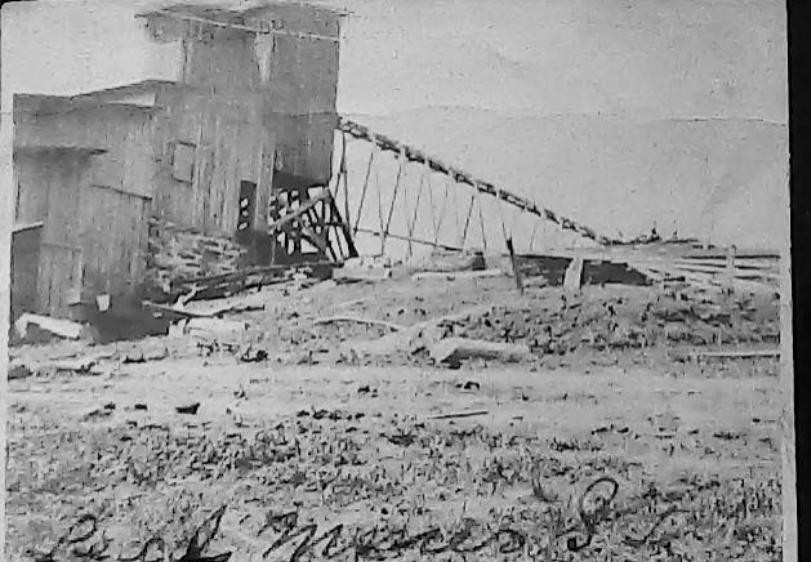
On Saturday, June 14, 1930, around midnight, a fire broke out in the Boiler Plant, part of the Teas Extract Plant. The fire was suspected to be arson, according to local newspaper coverage. The flames were first spotted by Robert Griffitts, who reported the fire, but by then, it was too late to save anything. The interior of the building was completely gutted by the time it was discovered. Witnesses reported that flames shot up the old smoke stack, which towered over Teas at 150 feet tall, and out from the top. At the time, the damage was considered minimal because the company had already planned to demolish the old building and sell the brick. After the fire, the walls remained standing, and the brickwork was undamaged. Mr. T. J. Maxwell reported that the total loss would amount to $300. In the aftermath, the Teas Extract Plant was demolished, and the 150-foot smoke stack was brought down with dynamite. Spectators gathered to watch, describing the explosion as reminiscent of a Fourth of July celebration. Such events were a rare sight in the area.

Communities, Extract Plant, Griffitts, Industry, Teas

Jothmada: A Logging Camp Along the Railroad

Jothmada: A Logging Camp Along the Railroad

Rails Through the Timber: The Forgotten Story of the Virginia Southern Railroad Tucked away in the steep ridges and hardwood forests of Grayson and Smyth Counties, the Virginia Southern Railroad once carved a lifeline through the mountains—a narrow-gauge logging route designed  for passengers, timber, mail, supplies, shipments and more. Though its memory has largely faded, traces of the rail and its legacy still echo through the woods near Sugar Grove and Fairwood, and in stories passed down by the region’s old timers. The Virginia Southern Railroad was the brainchild of Jerome W. Moltz, a seasoned lumberman who had already made his mark in Pennsylvania. There, his Moltz Lumber Company managed 7,000 acres of forest and operated 15 miles of logging railroad—an enterprise that remained active into the 1940s. Seeking new timber-rich territory, Moltz turned his attention southward to Grayson County, Virginia, and began constructing a new line between Sugar Grove and Fairwood. The purpose of the Virginia Southern was clear: harvest the vast reserves of timber in the region and transport it to nearby sawmills for processing. This industrial corridor quickly became a bustling artery of Appalachian lumbering, reshaping both the landscape and the economy. Eventually, the Virginia Southern, along with the Marion Rye Valley Railroad, came under the control of P.S. Swain of New York, who was appointed president over the combined 27-mile rail network. Swain’s oversight marked a period of organized expansion and efficiency, aligning two essential railroads under a single management structure during the peak of the southern Appalachian timber boom. One of the more curious landmarks along the Virginia Southern’s route was a stop known as Jothmada, located between Sugar Grove and Troutdale, near present-day Raccoon Branch Campground along Dickey’s Creek. The name “Jothmada” was a creative blend—formed by combining the first two letters of the first names of the wives of the four men who founded the local logging camp. While most of the women’s names have been lost to time, one is remembered: May Moltz, wife of Jerome. Old maps from 1916 and newspaper timetables list Jothmada/Jothmado (pronounced “jot a mada”) as a regular stop, and locals once referred to it as a “shack town,” a temporary settlement of logging workers. From this remote camp, narrow shoots of small-gauge rail snaked up into the mountains, allowing crews to access and fell timber from otherwise inaccessible terrain. The logs were hauled down to the main line, loaded onto trains, and transported to Troutdale and Fairwood for milling. The Jothmada stop was located at milepost 2 along the Virginia Southern Railway. After the U.S. Logging Company had exhausted the forests along the line between Sugar Grove and Troutdale, the area’s economic flame began to dim. With the timber gone, so too was the purpose of the rail. Eventually, the entire operation was sold to F.L. Knight of Lynchburg, marking the final chapter for the Virginia Southern Railroad. Though the tracks are long gone, the ghost of the Virginia Southern lives on in archival maps, rusted rail fragments, and place names that still cling to the landscape. It’s a story of ambition, resource extraction, and the transitory nature of boomtowns built on timber. Photo of Moltz Lumber Engineer Grant “Dutchman” Bruner leans on front truck of a Shay Engine delivering logs to the mill at Lake Toxaway, PA. The company operated similarly there as it did here even using the same Shay style engines. Special thanks to Gary Price and Ed Clayton for their contributions to the information in this article!

Industry, Railroad

Stirring Tradition: The Art of Making Apple Butter

Stirring Tradition: The Art of Making Apple Butter

In the heart of Southwest Virginia, the quiet community of Sugar Grove, the Combs Family keeps a rich Autumn Appalachian tradition alive: the making of apple butter. This slow-cooked, spiced spread is more than just a seasonal delicacy—it’s a symbol of heritage, hard work, and togetherness of families and neighbors. For generations, churches, families and neighbors in Sugar Grove have gathered around copper kettles, often before dawn, to stir previously peeled and sliced apples over open wood fires, sharing stories and passing down techniques as old as the mountains themselves. Apple butter making in this region dates back to the early settlers who relied on preserving fruits to last through the harsh winters. What began as a necessity eventually became a celebrated tradition, with church groups, neighbors, visitors, and family farms organizing this activity each Fall. These events are part work, part festival, featuring laughter, music, and the comforting aroma of cinnamon and firewood filling the crisp mountain air. Today, making apple butter in Sugar Grove is as much about preserving a way of life as it is about preserving apples. Whether sold at local markets or ladled into jars for holiday gifts, each batch carries with it a sense of place and history that only Southwest Virginia can offer. What Does The Process Look Like? On a crisp October morning in Sugar Grove, Virginia, the valley hums with the low crackle of a hardwood fire and the rhythmic scrape of a wooden stirrer against copper. It’s apple butter day at the Combs family homeplace, and that means more than just cooking—it’s a gathering of generations, neighbors, and even curious visitors drawn by the promise of rich tradition and the sweet scent of spiced apples hanging in the cool and still misty, very early morning mountain air. The process is usually underway by 4AM. A pole structure, open on two sides and draped with a heavy tarp to block the wind on one, sometimes two sides, shelters the heart of the operation: a weathered “cane furnace” fueled by hand-split oak logs. The hardwood burns hot and steady, heating a gleaming copper kettle that’s been cleaned and set in place since before dawn. Within it, bushels of peeled apples—often Wolf River or another available locally grown variety—have been simmering for hours. The apples slowly break down, to the rich, deep brown of true Appalachian apple butter.. At the center of the kettle stands a stirring stick, worn smooth by decades of use and lovingly passed down by Grandad Combs. This stirrer has been passed down through the family, and today, a younger member of the Combs family keeps the rhythm going, arms steady as they guide the long handle around and around. “Don’t stop stirring,” someone calls out with a grin—one of many reminders passed along with the craft. What happens if you stop stirring? The copper kettle scorches on the bottom.  The kettle must be constantly stirred to prevent this costly mistake. Around the fire, a circle begins to form. camp chairs, cinder blocks, and a few other things provide makeshift seating as family and friends gather closer to stay warm. The picnic table is moved over near the cane furnace, Potatoes wrapped in foil roast slowly over heat nearby, filling the air with an earthy, comforting aroma. As the sun climbs higher, casseroles, crock pots, and dessert trays begin to appear on picnic tables—homemade dishes brought by neighbors and friends in true potluck fashion. There’s cornbread, slow-cooked beans, and pies of every kind. There are usually hot dogs to roast over the fire at the other end of the cane furnace as well.  It’s a feast earned by patience and fueled by fellowship. What Exactly Is This “Cane Furnace?” The cane furnace is a brick rectangular structure standing at a height of about 2 feet that we also use in the process of making molasses with a large rectangular pan. The brick foundation is mudded and provides a place to build a fire under the whole pan to cook cane juice all day. There is a smoke stack to carry smoke up through the roof and away from the work area. When we use this for apple butter making, we do not use the entire length of it and cover it except for a cut out that we have for the kettle so that we still get the use of the smoke stack and use the covered surface for baking potatoes and the fire for roasting hot dogs. Visitors Throughout the day, visitors drop by—some from nearby, others from out of state, drawn by memory or curiosity. They’re welcomed with a variety of food options, a chair, and often a story or two. Here in Sugar Grove, making apple butter isn’t just about the end product. It’s about the fire, the food, the stories, and the stirring—together. There is a LOT of stirring!  Over the years, we have hosted many guests, some were content creators who produced an entire documentary about Appalachian Life focusing on our apple butter making and others from as far away as New York! Our family’s old time apple butter making has been the subject of the Appalachian Studies curriculum at Radford University and has provided many with insight into the culture and heritage of Southwest Virginia’s people. Some of the lucky ones even get to take a jar or two home with them! The Day Continues… As the day wears on, the kettle’s contents darken and thicken, transforming from tart apple pulp into a silky, spiced spread with just the right balance of sweetness, spice and tang as cinnamon and sugar are gradually added. Every so often, several elder family members tests a small spoonful on a saucer, and nodding in quiet approval. “Almost there,” they say, the phrase echoing like a ritual. The patience is part of the process, part of what makes the end result so special. Rushing isn’t an option when it comes to good apple butter. Grandad, while he…

Combs, Communities, Families, History, Resources, Sugar Grove

First Baptist Church Of Sugar Grove

First Baptist Church Of Sugar Grove

This article is being published in memory of Nancy Ann Purefoy 10/26/1933 – 3/26/2025 This beautiful little church house dates back to 1915 in the community of Sugar Grove. Records found at Smyth County Courthouse reflect March 10, 1915, a deed was made by Chaley Barber and his wife Alice to Andrew White Walter Stuart and A. F. Wilson who were both named as trustees. The sum of money exchanged to execute this deed was $30. This deed was made with specific restrictions that read “…said lot to be used for building a church house and not for any other purpose. Said church to be known as Shugar Grove Missionary Babtis Church- colored.” James Purefoy provided the following information and photo about the church on the Rye Valley History Group: This was the First Baptist Church in Sugar Grove, Va. It was the African American Church in the area.I can remember attending all day services there as a child. My mother, Nancy Lee Purefoy, attended there as a child. Her father, my grandfather, Fred Lee was a deacon there. My grandmother, Cleo Lee, was a deaconess. Some of the names of other people that attended were Barbers, Stuarts, Lees, Goins, Madisons, Thompsons, and Murrells. There were others that I cannot mention. This information was provided by my mother Nancy Lee Purefoy. Services continued at this church into the early 2000s. David Rutherford, then employed by Rye Valley Water Authority, shared the following about the property: When Rye Valley Water Authority was getting easements for new water line I traced the deeds back to try to find a signatory for the church property. Ended up getting Mrs. Cleo Lee to sign. Great Lady. The deeds referred to it being in the “colored section of Sugar Grove”. The details in the deed made it sound like the area was from the church back to where Gene Ross now lives out to Flat Ridge Road and back to Quarter Branch Road.   (2022-2024) The building collapsed under a heavy snow. The photo at left was what remained of this beautiful little church as of 2024. The church is shown on a 1935 Quadrangle map by location only, no name. Also on that same map, just down the road near the Quarter Branch and Flat Ridge Fork on the opposite side is another church labeled as “Union Ch.”  It is speculated that this could have served as the Sugar Grove Negro School up until the early 40s. The Sugar Grove Negro School is documented by Evelyn Thompson Lawrence in a book available about all of the Colored Schools in the county that can be found in the Heritage Room at the Smyth County Public Library in Marion, VA however, it does not mention any specific location where this school was located.         *If you have additional information to add about this church, please comment or use the contact form. We would love to add additional information.

Barbers, Black History, Churches, Communities, First Baptist Church Of Sugar Grove, Goins, Lee, Madison, Murrell, Purefoy, Stuart, Sugar Grove, Thompson

Teas History & William H. Teas

Teas History & William H. Teas

More than 100 years ago, the community of Teas was established and emerged. May 10, 1910, a charter was granted to the Marion Extract Company of not less than $300k and not more than $600k.  The officers named on this charter were W.H. Teas of Ridgeway, PA, President and E.M. Campbell also of Ridgeway PA, Vice President. Also J.C. Campbell of Marion was named Secretary and Treasurer. Within a few days of this charter, the company purchased land in Rye Valley which was located along the line of the Marion Rye Valley Railroad. This was designated to be used for the new extract plant that would soon dominate the area.  It would be one of the largest of its kind.  Read more about the Teas Extract Plant here. The extract plant was expected to be in full operation by January 1, 1911. It would employ more than 100 men on startup. Teas was named for William Holmes Teas (1876-1930). Mr. Teas built a spacious home near the extract plant he would oversee which is still standing today. He was born in Patterson, NJ to the Reverend John Teas and Elizabeth M. Holmes-Teas and was a graduate of Penn State College. His father was pastor of a United Presbyterian church. He worked in and around Philadelphia for a while after graduating college until he met his wife, Margaret Hoblitzell.   He later established the offices of the Marion Extract Company and then following that, the extract plant and the town of Teas.  The family spent about 5 years in the area and were well known. They had 3 boys.  In the photo shown, you see the home that Mr. Teas built. It was later the home of G. H. Wilson and family. (shown in photo). The Teas Extract Plant proved to be very profitable in the area and brought jobs to many. It also brought many people to the area and created a need for company housing, a couple of stores, a school and all of the community events and activities that come along with an influx of people.  Teas School operated until approximately 1957 according to most. The Teas Family relocated to a home along the Chesapeake Bay where he passed away from a brief illness of influenza which turned into bronchial pneumonia on April 28, 1935.  Mrs. Teas then made her home in Nashville, TN where the principal factory was then located.  William Teas was interred in the West Laurel Cemetery in Philadelphia.  A brief service was described in their home in Sharspoint which is near Annapolis, MD.   Services were conducted at the Blair Funeral Parlors where services were conducted jointly by Dr. Goodridge Wilson of Marion, VA and Dr. Johnson, Rector of  Old St. Anne’s Episcopal Church in Annapolis The Teas Community prospered until  production slowed; most of the chestnut trees were gone from which they used for extraction by 1930. The extract plant was eventually vacant. The company housing disappeared one by one, stores closed, the post office closed and those people then used the one at nearby Sugar Grove. Once a booming little industry town, it gradually became the quiet little suburb of Sugar Grove we have today, retaining its name.    

Communities, Extract Plant, History, Industry, Teas

Sugar Grove Fiddlers Convention at Highlands Park

Sugar Grove Fiddlers Convention at Highlands Park

The Sugar Grove Fiddlers Convention first began in the early 70s and was hosted by the Sugar Grove Fire Department.  This event was set up on the ball field at Sugar Grove School for a number of years and featured musical entertainment from all around. At one point, Bonnie Raitt performed in Sugar Grove prior to becoming widely known and going mainstream. This has been confirmed by at least 3 individuals who were in attendance. She was also confirmed in the area as close as Galax during that same time. The Fire Department provided food and drinks at this time and benefited from the proceeds.  At some point during the 1970s, this event was moved to a new location owned by the Medley Family at Cedar Springs. It is not completely clear why the event had a change of venue but several have suggested it was because upgrades were offered at the new location to accommodate more people and more popular performers. Additionally, alcohol and a broader variety of concessions could be brought in at a location off school property. This location became known as Highlands Park and from that point forward, the event was then known as The Sugar Grove Fiddlers Convention at Highlands Park. This venue consisted of a covered stage area, lighting, sound equipment and a more professional entertainment setting that was better equipped to accommodate performers as well as the audience.  This event routinely drew at least a thousand or more people and became very popular. The Sugar Grove Fire Department continued to cater the event providing food and drinks as a fundraiser for their organization and the event grew steadily until the summer of 1977. (Photo of original shirt contributed by Michael Osborne) July 1977 Incident at the Sugar Grove Fiddlers Convention The Sugar Grove Fiddlers Convention was in full swing on a hot summer July weekend, more than one thousand people were in attendance according to Smyth County News. A disturbance was noted mid-day between two individuals who were arguing but that seemed to subside without further incident. The musical entertainment continued into the evening. Just after 11 PM, a single gunshot suddenly rang out. Everything suddenly came to a screeching halt. Chaos ensued as attendees became aware that someone had been shot among them. The newspaper confirmed this along with the following information:  “A Smyth County man was shot in the face Saturday night as he sat in front of the band box at the fiddlers convention.”  The article goes on to identify the victim as Charles Peake, 34,  of Sugar Grove and reads “Witnesses said a man walked up behind Peake, stuck a pistol in his mouth and puled the trigger.” Peake escaped certain death from the gunshot when he jerked his head causing the bullet to pass through his lip and exit out the side of his face. Miraculously no one else was hit or harmed. He was treated at the hospital for minor injuries and released. Witnesses confirmed the man identified as the shooter was the same man who had been seen arguing with Peake earlier in the day. Both men were initially arrested in relation to the incident. Noel Bain Johnson was charged with “unlawfully and felonously using a firearm in the commission of a felony” according to the Smyth County News and Smyth County Sheriff’s Department.  Johnson was picked up by Smyth County Sheriff’s Department,  and booked at 9:45 PM Sunday July 10th and was released on $25,000 bond. Common Law Order Book 23, Page 477 available at the Smyth County Courthouse reflects a jury indictment as follows: “Noel Bain Johnson- using a pistol in attempt to murder- a True Bill.” and ” Malicious wounding – a True Bill”  signed and entered by Judge J. Aubrey Matthews, August 23, 1977. This marked the end of an era and series of entertainment events for Sugar Grove. Other Little Stories and Interesting Things The day after the event, the Millers would all go to Highlands Park and take along some neighborhood kids and black trash bags to pick up trash and clean the grounds. They earned money for every full bag of trash collected. If you have additional details to add to this topic, please use the Contact page and let us know!  Articles are always open for updates and additional content, photos or information.    

Cedar Springs, Sugar Grove

Urban Legends: Octagon House Hauntings

Urban Legends: Octagon House Hauntings

DISCLAIMER: 𝖳𝗁𝖾 𝖿𝗈𝗅𝗅𝗈𝗐𝗂𝗇𝗀 𝖺𝗋𝗍𝗂𝖼𝗅𝖾 𝖾𝗑𝗉𝗅𝗈𝗋𝖾𝗌 multiple urban legends. 𝖯𝗅𝖾𝖺𝗌𝖾 𝗇𝗈𝗍𝖾 𝗍𝗁𝖺𝗍 𝗍𝗁𝖾 𝖾𝗏𝖾𝗇𝗍𝗌 𝖽𝖾𝗌𝖼𝗋𝗂𝖻𝖾𝖽 𝖺𝗋𝖾 𝗉𝖺𝗋𝗍 𝗈𝖿 𝖿𝗈𝗅𝗄𝗅𝗈𝗋𝖾, 𝗆𝗒𝗍𝗁, 𝗈𝗋 𝗎𝗇𝗏𝖾𝗋𝗂𝖿𝗂𝖾𝖽 𝖺𝖼𝖼𝗈𝗎𝗇𝗍𝗌, 𝖺𝗇𝖽 𝖺𝗋𝖾 𝗇𝗈𝗍 𝖻𝖺𝗌𝖾𝖽 𝗈𝗇 𝖼𝗈𝗇𝖿𝗂𝗋𝗆𝖾𝖽 𝖿𝖺𝖼𝗍𝗌. 𝖱𝖾𝖺𝖽𝖾𝗋 𝖽𝗂𝗌𝖼𝗋𝖾𝗍𝗂𝗈𝗇 𝗂𝗌 𝖺𝖽𝗏𝗂𝗌𝖾𝖽, 𝖺𝗌 𝗌𝗈𝗆𝖾 𝖽𝖾𝗍𝖺𝗂𝗅𝗌 𝗆𝖺𝗒 𝖻𝖾 𝗎𝗇𝗌𝖾𝗍𝗍𝗅𝗂𝗇𝗀 𝗈𝗋 𝖽𝗂𝗌𝗍𝗎𝗋𝖻𝗂𝗇𝗀. 𝖳𝗁𝗂𝗌 𝖺𝗋𝗍𝗂𝖼𝗅𝖾  𝗌𝗁𝗈𝗎𝗅𝖽 𝗇𝗈𝗍 𝖻𝖾 𝗍𝖺𝗄𝖾𝗇 𝖺𝗌 𝖺𝗇 𝖺𝖼𝖼𝗎𝗋𝖺𝗍𝖾 𝖽𝖾𝗉𝗂𝖼𝗍𝗂𝗈𝗇 𝗈𝖿 𝗋𝖾𝖺𝗅 𝖾𝗏𝖾𝗇𝗍𝗌. There are several urban legend-like stories that have been around for decades surrounding the Octagon House. These tales have almost become a part of local culture, at least with people of a certain age group. Let’s explore some of these tales. We have an actual brief history of the Octagon House HERE if you would like to read about the factual history before you embark upon the local stories. Abijah’s Ghost Walk On December 1st, it is said that the ghost of Abijah Thomas appears at dusk as an eerie blue-white glow, moving between the remains of his beloved octagonal house, Mountainview, and the Thomas family cemetery just up the hill, where his grave is located. It is believed that he returns on the anniversary of his unexpected death to check on his cherished home. The sightings are not interactive, and all reports suggest that this is a residual haunting rather than an active one. This ghost story is perhaps one of the longest standing stories to be passed around locally. The Cellar The cellar is often regarded as the most haunted spot on the property and is the focal point of numerous tales of malevolent paranormal encounters. It is said to have been the site where slaves were beaten for failing to perform their work properly. Various versions of the story have circulated, but the most widely known claims that if you stand on the ground behind the house, where the cellar once was, after sunset, you will be confronted by an evil spirit that demands you leave the property. Those who do not heed the warning may suffer physical harm. Other accounts suggest that visitors can hear the anguished screams of those who died on the property, emanating from this mysterious cellar. This version also ends with the evil spirit confronting those present, urging them to depart. Some people feel compelled to bring a rosary, crucifix, or other spiritual items for protection if they dare to visit the location. It is factually known that there was no evidence of a cellar found anywhere around the house and specifically not at the rear of the house near the back door as most of these tales indicate.  Additionally, according to various local historical sources, many of the slaves who were owned by Abijah Thomas remained there after slavery was abolished following the Civil War and done so because they were treated well by the family. The Dark Room The dark room was another area on the property known for paranormal activity. Located on the second floor at the top of the stairs, it was centrally situated in the house. The room had no windows and only one door. Popular stories about it included rattling chains, eerie screams, slamming locking doors and blood stains on the floor and walls. It was said to have been a place where slaves, and sometimes even the Thomas children, were punished—locked away for long periods without food. Given its location on the second floor, attempting to access the room, especially in the dark, would have been dangerous—particularly during the time when people dared to enter the house after it had been condemned. The room itself was oddly sized, making it suitable for storage as it was intended.  While no blood stains were found on the remaining white plaster walls, there were dark stains on the floorboards. However, it was determined these were not blood stains, but rather food stains from canned goods that had either broken or spoiled, leaving the dark stains. Priscilla Thompson, the daughter of Abijah Thomas, clarified in writing that the room had always been used for storage and that no one was ever punished there. She also mentioned that when the door was open, enough light came through to see whatever one was looking for in the room. This writing was reproduced in the article about the octagon house. The Ghost Who Threw People Out the Window As early as the late 1990s, a popular story began circulating about an especially angry spirit said to haunt the Octagon House. The tale was linked to a broken window on the second floor at the back of the house. A particularly jagged shard of glass remained hanging in the window frame, having not fallen out. According to the story, the spirit that haunted the second floor and guarded the dark room was so enraged by a trespasser who could not be convinced to leave, that it hurled them out of the window, throwing them from the second story with an unseen force, effectively ejecting them from the house. This became a widely circulated tale, often used to warn people to stay away from the second floor. While there are no verified reports of anyone actually being thrown out of a second-story window, countless stories have been passed down through the years about people—mostly young adults—visiting the property as a sort of rite of passage. Many went there in groups for a thrill, to get scared, or to drink and smoke pot. It’s possible that someone could have fallen out of the window, though it likely went unreported, possibly to avoid trespassing charges or other consequences. The Sign Of The Cross This story dates back to 2002. One evening, a group of high school students from Marion, along with a few from Sugar Grove, decided to visit the Octagon House just before sunset. Their goal was to explore the house and see if the rumors about it being haunted were true. They even considered holding a séance to see if they could provoke any paranormal activity. To avoid getting caught, they arranged for a friend to drop them off,…

Stories, Thomas, Thomas Bridge