
History of Rowland Creek Church of The Brethren
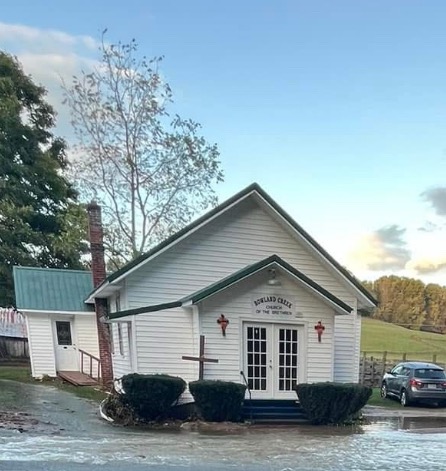
The church was organized July 15, 1911, by 23 former members of the Mountain View Church of the Brethren in Grayson County, Virginia, who lived in or near the Rowland Creek community. A week later, two more members transferred from the German Baptist Church in Bristol, Tennessee. At the first meeting, W. H. Handy was voted the Pastor and Elder. Other officers included a clerk, deacons, and delegates to the district meetings. At first the meetings of the church were conducted in an old school building located a few hundred yards from the present church location. The school was a community project since decisions for repairs had to be approved by the citizens of the community. During the time that the old school-house was used, there were several roof repairs and the installation of a stove and stovepipe. Such projects were often paid for by the community. On October 18, 1918, the church voted the school out of the building and resolved that the deed to the property be recorded in the name of the church. The current church was built in the late1920’s. Sunday School rooms were added in 1955. In 1934, there were ninety-three members. Led by Pastor David Cleary from 1947 to 1972, the church grew rapidly. In 1955, the congregation split, when Sunday School literature began using the Revised Standard Version of the Bible. The ones disapproving of the new literature built a new church, the Independent Brethren Church, farther up Rowland Creek Lane. The pastor for over 40 years was Fred Parker, who passed away in 2023. Currently the church has no regular pastor. Visiting preachers hold worship services monthly. Sunday School is attended by 15 to 25 people. The congregation still celebrates Easter Sunrise service and has a Christmas program each year. They also give a bag of Christmas treats to all, a tradition for over 100 years. For many decades in the tiny community of Stoney Battery, a valley sheltered by the foothills of mountains beyond, everyone walked to church. And almost everyone went: the church was often so crowded that people stood outside during the services. Vacation Bible School always overflowed with happy children learning to sing the books of the Bible. Few faithful are left, but they are faithful.


