Rye Valley History

Category: Industry

The History Keepers- Sena Roberts-Ward

The History Keepers- Sena Roberts-Ward

“The History Keepers” is a special series on our website dedicated to honoring those who have preserved and chronicled the stories of our region. Through their writings, collections, and memories—sometimes shared directly, sometimes lovingly submitted by their families—we celebrate the voices that have safeguarded our local heritage. One such voice belongs to Mrs. Sena Roberts-Ward. If you’re from this area, you likely knew her, heard her name spoken with respect, or admired the graceful mill she restored and tended in Sugar Grove—a quiet sentinel that still reminds us of our heritage. Mrs. Ward lived 94 remarkable years, bridging generations and bearing witness to much of the history we now study and remember. Her life overlapped with elders who themselves had lived through even earlier chapters of our community’s story. Her lineage traces directly to several of the pioneer families who settled the Rye Valley, and her deep knowledge of that legacy was matched by her high academic achievements and meticulous care for detail. We are especially grateful for the writings, photographs and memories she left behind—many of which remain unpublished, yet hold invaluable insights into our shared past. Her work is a gift to all of us, and through this series, we hope to bring it to light, honoring her dedication and the enduring spirit of those who keep history alive.  Sena Roberts-Ward was one of many who have posthumously contributed to this research and compilation of the History of the Rye Valley and here is her story transcribed from documents found in her own collection: Sena Narcissus Roberts was born February 26, 1901 in Flat Ridge, the first child of Adam Batey and Laura Elizabeth Jennings-Roberts, and the first grandchild of Charles Lafayette Jennings of Camp. She was joined by two brothers, Wiley Winton and Charles Maurice. The family grew up in Grayson and Smyth Counties. She was a graduate of Berea College in Kentucky, and did graduate work at the University of Virginia. She was one of the early home demonstration agents of Kentucky and taught high school and home economics in Mullens, WV. In 1932 she married Clarence John Ward and they were parents of two daughters, Laura Frances and Elizabeth Lavinia. She was the home economics teacher at William Flemming High School in Roanoke, and then operated the Hamm-Roberts Mill in Sugar Grove. In 1968 she retired from the Southwestern State Hospital as a dietitian and returned to Sugar Grove, where she did substitute teaching. With help from many friends, neighbors and relatives, she ran the family farm for several years. Her interests included a wide range of farming activities, from raising cattle to making molasses. She made a study of genealogy of her own family as well as others. She had a special fondness of country living, and her warm, wonderful friends and neighbors were a source of help and comfort to her during her declining hears. Although she saw several generations, she was always especially delighted with the newest generation. She maintained a joy of living almost until the very end. *We would like to extend a special thank you to Elizabeth Ward-Allison and her family for these contributions. **Photos from the Sena Roberts-Ward collection

Business, Camp, Education, Families, Genaology, History, History Keepers, Mill, Roberts, Ward

Fire At the Boiler Plant at Teas

Fire At the Boiler Plant at Teas

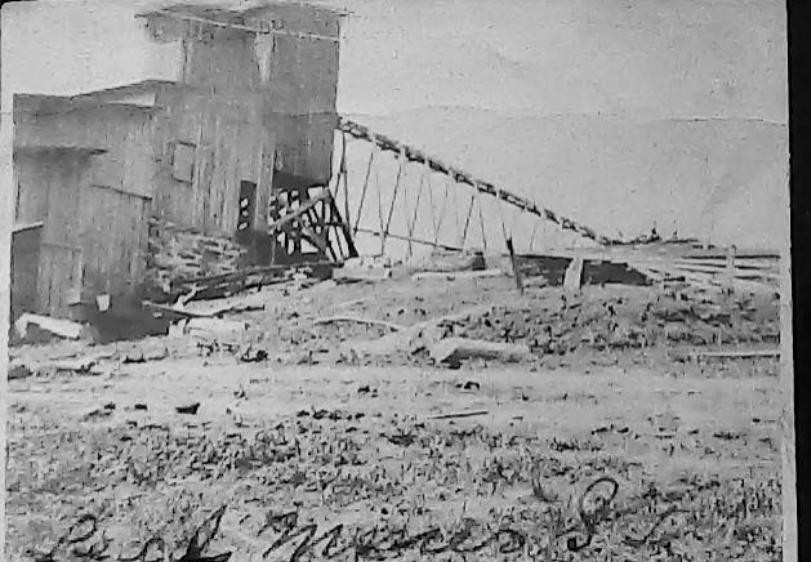
On Saturday, June 14, 1930, around midnight, a fire broke out in the Boiler Plant, part of the Teas Extract Plant. The fire was suspected to be arson, according to local newspaper coverage. The flames were first spotted by Robert Griffitts, who reported the fire, but by then, it was too late to save anything. The interior of the building was completely gutted by the time it was discovered. Witnesses reported that flames shot up the old smoke stack, which towered over Teas at 150 feet tall, and out from the top. At the time, the damage was considered minimal because the company had already planned to demolish the old building and sell the brick. After the fire, the walls remained standing, and the brickwork was undamaged. Mr. T. J. Maxwell reported that the total loss would amount to $300. In the aftermath, the Teas Extract Plant was demolished, and the 150-foot smoke stack was brought down with dynamite. Spectators gathered to watch, describing the explosion as reminiscent of a Fourth of July celebration. Such events were a rare sight in the area.

Communities, Extract Plant, Griffitts, Industry, Teas

Jothmada: A Logging Camp Along the Railroad

Jothmada: A Logging Camp Along the Railroad

Rails Through the Timber: The Forgotten Story of the Virginia Southern Railroad Tucked away in the steep ridges and hardwood forests of Grayson and Smyth Counties, the Virginia Southern Railroad once carved a lifeline through the mountains—a narrow-gauge logging route designed  for passengers, timber, mail, supplies, shipments and more. Though its memory has largely faded, traces of the rail and its legacy still echo through the woods near Sugar Grove and Fairwood, and in stories passed down by the region’s old timers. The Virginia Southern Railroad was the brainchild of Jerome W. Moltz, a seasoned lumberman who had already made his mark in Pennsylvania. There, his Moltz Lumber Company managed 7,000 acres of forest and operated 15 miles of logging railroad—an enterprise that remained active into the 1940s. Seeking new timber-rich territory, Moltz turned his attention southward to Grayson County, Virginia, and began constructing a new line between Sugar Grove and Fairwood. The purpose of the Virginia Southern was clear: harvest the vast reserves of timber in the region and transport it to nearby sawmills for processing. This industrial corridor quickly became a bustling artery of Appalachian lumbering, reshaping both the landscape and the economy. Eventually, the Virginia Southern, along with the Marion Rye Valley Railroad, came under the control of P.S. Swain of New York, who was appointed president over the combined 27-mile rail network. Swain’s oversight marked a period of organized expansion and efficiency, aligning two essential railroads under a single management structure during the peak of the southern Appalachian timber boom. One of the more curious landmarks along the Virginia Southern’s route was a stop known as Jothmada, located between Sugar Grove and Troutdale, near present-day Raccoon Branch Campground along Dickey’s Creek. The name “Jothmada” was a creative blend—formed by combining the first two letters of the first names of the wives of the four men who founded the local logging camp. While most of the women’s names have been lost to time, one is remembered: May Moltz, wife of Jerome. Old maps from 1916 and newspaper timetables list Jothmada/Jothmado (pronounced “jot a mada”) as a regular stop, and locals once referred to it as a “shack town,” a temporary settlement of logging workers. From this remote camp, narrow shoots of small-gauge rail snaked up into the mountains, allowing crews to access and fell timber from otherwise inaccessible terrain. The logs were hauled down to the main line, loaded onto trains, and transported to Troutdale and Fairwood for milling. The Jothmada stop was located at milepost 2 along the Virginia Southern Railway. After the U.S. Logging Company had exhausted the forests along the line between Sugar Grove and Troutdale, the area’s economic flame began to dim. With the timber gone, so too was the purpose of the rail. Eventually, the entire operation was sold to F.L. Knight of Lynchburg, marking the final chapter for the Virginia Southern Railroad. Though the tracks are long gone, the ghost of the Virginia Southern lives on in archival maps, rusted rail fragments, and place names that still cling to the landscape. It’s a story of ambition, resource extraction, and the transitory nature of boomtowns built on timber. Photo of Moltz Lumber Engineer Grant “Dutchman” Bruner leans on front truck of a Shay Engine delivering logs to the mill at Lake Toxaway, PA. The company operated similarly there as it did here even using the same Shay style engines. Special thanks to Gary Price and Ed Clayton for their contributions to the information in this article!

Industry, Railroad

Teas History & William H. Teas

Teas History & William H. Teas

More than 100 years ago, the community of Teas was established and emerged. May 10, 1910, a charter was granted to the Marion Extract Company of not less than $300k and not more than $600k.  The officers named on this charter were W.H. Teas of Ridgeway, PA, President and E.M. Campbell also of Ridgeway PA, Vice President. Also J.C. Campbell of Marion was named Secretary and Treasurer. Within a few days of this charter, the company purchased land in Rye Valley which was located along the line of the Marion Rye Valley Railroad. This was designated to be used for the new extract plant that would soon dominate the area.  It would be one of the largest of its kind.  Read more about the Teas Extract Plant here. The extract plant was expected to be in full operation by January 1, 1911. It would employ more than 100 men on startup. Teas was named for William Holmes Teas (1876-1930). Mr. Teas built a spacious home near the extract plant he would oversee which is still standing today. He was born in Patterson, NJ to the Reverend John Teas and Elizabeth M. Holmes-Teas and was a graduate of Penn State College. His father was pastor of a United Presbyterian church. He worked in and around Philadelphia for a while after graduating college until he met his wife, Margaret Hoblitzell.   He later established the offices of the Marion Extract Company and then following that, the extract plant and the town of Teas.  The family spent about 5 years in the area and were well known. They had 3 boys.  In the photo shown, you see the home that Mr. Teas built. It was later the home of G. H. Wilson and family. (shown in photo). The Teas Extract Plant proved to be very profitable in the area and brought jobs to many. It also brought many people to the area and created a need for company housing, a couple of stores, a school and all of the community events and activities that come along with an influx of people.  Teas School operated until approximately 1957 according to most. The Teas Family relocated to a home along the Chesapeake Bay where he passed away from a brief illness of influenza which turned into bronchial pneumonia on April 28, 1935.  Mrs. Teas then made her home in Nashville, TN where the principal factory was then located.  William Teas was interred in the West Laurel Cemetery in Philadelphia.  A brief service was described in their home in Sharspoint which is near Annapolis, MD.   Services were conducted at the Blair Funeral Parlors where services were conducted jointly by Dr. Goodridge Wilson of Marion, VA and Dr. Johnson, Rector of  Old St. Anne’s Episcopal Church in Annapolis The Teas Community prospered until  production slowed; most of the chestnut trees were gone from which they used for extraction by 1930. The extract plant was eventually vacant. The company housing disappeared one by one, stores closed, the post office closed and those people then used the one at nearby Sugar Grove. Once a booming little industry town, it gradually became the quiet little suburb of Sugar Grove we have today, retaining its name.    

Communities, Extract Plant, History, Industry, Teas

Abijah Thomas and Holston Mills

Abijah Thomas and Holston Mills

The Rise and Fall of Holston Mills: A Historic Textile Town In 1844, industrialist Abijah Thomas made a significant investment in a 344-acre tract of land, complete with a sawmill and grist mill, in what would later become the town of Holston Mills. This land was nestled within a growing area that would become the heart of a bustling industrial hub during the 19th century. By the early 1860s, Thomas, along with a business partner, founded the Holston Woolen Factory, marking the beginning of the town’s rise as a textile center. The Holston Woolen Factory became a major producer of textiles, particularly wool, and played an integral role in the local economy. The village that grew around the factory adopted the name Holston Mills, a nod to the success and importance of the textile mill in the region. The town’s growth was not limited to the mill itself; as the factory flourished, so did the surrounding community. Residential areas, shops, and services began to spring up, creating a vibrant, self-sustaining village. The Impact of the Civil War During the American Civil War, Holston Mills found itself at the center of wartime industry. The village became the site of Co. A of the 23rd Battalion of the Virginia Infantry, and the woolen mill played a crucial role in supporting the Confederate war effort. The factory produced textiles for Confederate uniforms, contributing to the logistical needs of the Southern army. This connection to the war effort highlighted the strategic significance of Holston Mills, not just as a community, but as an essential manufacturing hub during one of the most tumultuous periods in American history. However, following the end of the Civil War, the mill and the town faced challenges. The industry was left dormant for a time, and the post-war years proved difficult for many Southern communities, as they struggled to recover from the destruction of the war. But Holston Mills would not remain stagnant for long. A New Era of Prosperity In the years following the Civil War, the Holston Woolen Factory saw a revival. In 1875, new ownership took over the mill, marking the beginning of a period of renewed prosperity for the town. With fresh investment, the mill, now known as Holstein Woolen Mills, began to expand once again. This resurgence allowed Holston Mills to grow into a fully developed village, with a school, shops, a post office, and a telegraph office. The mill and the infrastructure surrounding it helped solidify the town’s status as a thriving industrial community in the late 19th century. The new owners were instrumental in modernizing operations at Holstein Woolen Mills, ensuring that it remained competitive in a rapidly changing industry. As the town’s population grew, so did the demand for services, and Holston Mills became an attractive place for workers and families looking for employment opportunities in the textile industry. The Decline of Holston Mills However, as with many industrial towns, the fortunes of Holston Mills would eventually shift. In the early 1890s, Holstein Woolen Mills relocated to Salem, marking the beginning of the village’s decline. Without the mill as the central driving force of its economy, the town began to lose its former vibrancy. The population dwindled as people moved away in search of new opportunities, and the shops, post office, and other services that had once been vital to the community fell into disuse. Over time, Holston Mills was abandoned, and what had once been a bustling industrial village gradually disappeared. Today, little remains of the once-thriving town, but its legacy as an important part of the 19th-century textile industry lives on. The rise and fall of Holston Mills serves as a reminder of the rapid changes that can occur in industrial communities, and the impact that one mill can have on the development of a town. Holston Mills may no longer be a vibrant community, but its history stands as an important chapter in the story of America’s industrial past, illustrating both the opportunities and challenges that came with the growth of the textile industry in the 19th century. The location is on Red Stone Road, north of Old Mill Road/South Fork Road (County Routes 648/650). When traveling north, it will be on the right-hand side.  A historical marker is located at or near 2107 Red Stone Rd, Marion, VA 24354, United States.

Adwolfe, Black History, Communities, Holston Mills, Industry, Thomas Bridge

The Abijah Thomas Octagon House

The Abijah Thomas Octagon House

Abijah Thomas was born on May 21, 1814, in what was then Washington County, later part of Smyth County when it was formed in 1832. He was the son of Thomas Thomas and grandson of John Thomas. At the time of his birth, the United States was still in its infancy, with only 18 states in the union, James Madison serving as the 4th president, and the War of 1812 just concluded. That year also marked the establishment of Francis Cabot Lowell’s textile mill in Massachusetts, which would later inspire Abijah’s own textile operations in Southwest Virginia. Raised in a farming family, Abijah’s father and grandfather had worked the land, but the region was rapidly industrializing, embracing manpower, water power, and horse power. Abijah adapted to this change, becoming a manufacturer of iron, textiles, and leather goods. His father, Thomas Thomas, held several significant roles in the community, including Justice of Washington County in 1806, overseer of roads in 1819, and Sheriff of Washington County in 1831-32. He also carried the title of “Esquire,” reflecting his high social standing. In 1795, a land survey granted John Thomas 230 acres along the South Fork of the Holston River, where he established a grist mill and sawmill. This same land would later become the site of Holston Mills, one of Smyth County’s first industries, founded by Abijah around 1860. Abijah’s father married Freelove Cole, daughter of Joseph and Remember Cole, early settlers from New York. She is credited with naming Marion, the county seat, in honor of Revolutionary War hero Francis Marion, the Swamp Fox,  during a conversation at the Thomas home in 1832 during a visit from a commissioner. Abijah grew up on the farm, learning traditional skills like hunting, fishing, blacksmithing, and tanning animal hides. He attended a private school in Wythe County, learning reading, writing, and arithmetic, and later became a skilled carpenter and surveyor. Notably, he was one of the few to subscribe to a newspaper, which he would read aloud to neighbors. Abijah also built the first threshing machine in Smyth County and operated several iron furnaces and Holston Mills. When Smyth County was formed in 1832, Thomas Thomas and William Porter, Abijah’s brother-in-law, became justices of the new county. Abijah married Priscilla Cavinette Scott in 1836 in a ceremony performed at her parents’ home by Reverend Robertson Gannaway. At 22, Abijah and his 16-year-old bride set up their first home in a log cabin on the Thomas farm, near the site of the later famous Octagon House. Abijah owned slaves, and Priscilla managed the household, training servants, educating children, and caring for the servants, providing for their well-being, including sewing clothes and supplying bedding, blankets and quilts as needed. In 1856-57, Abijah constructed the Octagon House, also known as Mountainview, a striking and unusual architectural feat in the region. Built with the help of skilled carpenters, brick masons, and slaves, the house was inspired by Orson Squire Fowler’s octagonal designs and was the only one of its kind in Southwest Virginia before the Civil War. The home featured innovative design elements like triangular spaces used for closets and custom-shaped corner bricks. Built on a 10×10 central beam, the home sat on limestone hauled from an unknown quarry, with materials crafted on-site. It boasted 17 rooms and an intricate roof structure to support shingles and metal coverings. The Octagon House reflected a national “octagon fad,” inspired by Fowler’s own 1853 construction in New York. Some suggested that Abijah chose the design to ward off wind or to avoid being trapped in a corner by the Devil, while others thought he believed in the octagon’s superior qualities. The house’s 16-foot thick walls rose 22 feet to the roofline, with 32 windows providing natural light. A porch ran along the three front sides, and a second-floor promenade deck was accessible from the second-floor doors. The interior had a spacious layout with 8 rooms on the first floor, including a parlor with pink marbleized plaster and a chandelier, a family room with built-in storage, and a winter kitchen. Upstairs, there were bedrooms, including the Thomas girls’ rooms, a master bedroom, and the infamous “dark room,” used for storage, not punishment as urban legends suggest. The Dark Room is located in the center of the 2nd floor of the Octagon House and therefore has no windows or natural light. It has been the subject of many a horrific tale and has become an urban legend over the years. This room measures 15’ 8” x 8’ 1” and was factually used for storage of food and other items in the Thomas house.  Some information can be found in a 1940 writing of Priscilla C Thompson, Abijah’s daughter which reads: The dark room upstairs was used as a store room, a catch-all for cotton bats, patent office reports, Congress records, etc.  When the door into the upstairs hall was open, the room was sufficiently light to find anything wanted. The idea of my father using this room as a jail to punish any one of the children is all a myth. Urban legends tell a more horrific story of a haunted “slave house” where the owner used the dark room to whip and punish slaves and also lock up his own children as punishment. The size of the room wouldn’t be adequate for this as well as the fact that it is located on the 2nd floor making it not readily accessible for these purposes. Furthermore, the dark stains on the floor said to be blood stains are factually food stains from canned food that broke or spoiled after bring stored there long after the civil war and abolishment of slavery. The white plaster walls do not reflect any such stains. Abijah Thomas was said to treat his servants well contrary to urban legend. Upon close examination of the brick in the Octagon house, you can find the remaining fingerprints of the slave children who formed the bricks that were used in…

Black History, Families, Holston Mills, Homes, Industry, Slavery, Thomas, Thomas Bridge

The Wreck of the Number 9- A Day In The History of the Marion Rye Valley Railroad

The Wreck of the Number 9- A Day In The History of the Marion Rye Valley Railroad

September 10, 1912 began like most other days, the crew boarded a boxcar coupled to the #9 Shay in Fariwood and headed up to their work site on Pine Mountain.  Kent Steffey was a seasoned 45-year-old engineer, respected for his skill and experience. A proud member of the Brotherhood of Engineers Union, and a native of Wythe County who had relocated  along with his wife to Wilson Creek, Grayson County.  Steffey worked for Spruce Lumber Company. He was known for his dedication to his work, and on the fateful day in September, he was once again at the helm of Shay locomotive #9, taking on the daunting task of navigating Pine Mountain. The journey from Fairwood to the top of Pine Mountain was no small feat. Spanning about five miles, it took roughly an hour for Steffey to guide the massive locomotive up the switchback. The logging crew was dropped off  and Steffey’s train was turned to begin its descent. It was here that things took a tragic and unexpected turn. As the train began its descent down the mountain, which featured a steep 6% grade, Steffey applied the brakes, expecting to slow the heavy load. However, to his horror, there were no brakes. The train began to pick up speed rapidly, and Steffey realized the full extent of the danger. Without brakes, he was helpless to slow the train as it hurtled downhill. He whistled to the back of the train to alert the Fireman. The train reached dangerous speeds, and the situation worsened as gears started stripping off the wheels, further reducing the train’s resistance. At this point, Steffey’s options were limited. In a desperate attempt to alert the crew and prevent a disaster, the fireman, Nute Bateman, tied off the whistle to signal impending doom. Bateman, fearing for his life, jumped off the train, narrowly escaping the impending crash and certain death. Meanwhile, Fields Anderson, the conductor, managed to lock the brakes on the last car in a last-ditch effort to stop the train. Realizing they had no chance of stopping the runaway train, Anderson also jumped, watching helplessly as the train sped away around the bend. Both Bateman and Anderson survived, though they could do nothing but watch in horror as the train disappeared around a curve in the mountain. Moments later, the sound of a horrific crash echoed across the valley. The two men rushed to the scene of the wreck, which wasn’t far from where they had jumped. As they approached, they saw the twisted, mangled wreckage of the train, derailed and overturned on its side. The wreck was a scene of utter devastation. Steffey, however, was not immediately found. It wasn’t until later that his body was discovered, crushed beneath the boiler of the 65-ton Shay locomotive. Kent Steffey’s death was a tragic loss. He was survived by his wife, Emma, and their four children: Mabel, Ruth, Virginia, and Mary. His passing left a deep void in the community, especially for his family and colleagues at Spruce Lumber Company. Despite the danger he faced, Steffey’s courage and quick thinking during his final moments, as well as the brave actions of his crew members, remain a testament to the sacrifices made by railroad workers every day. All that remains is his tombstone in Rural Retreat, Va., and this ballad, “The Wreck of Ole Number Nine.” Kent Steffey was an engineer, the best one on the line. Each morning he’d leave Fairwood with his Engine Number Nine. To the mountains he would go, making sure to run on time, Not knowing that his fate relied on his lucky Number Nine. Fields Anderson was conductor on that fateful day. The autumn sun shone brightly, painting the world in gay display. Beneath the clear, blue sky, no hint of danger lay, But the engine’s brakes refused to work, and Kent’s train ran away. “On brakes, on brakes!” he whistled, but the brakemen were all gone, And the fireman, Nute Bateman, thinking of his home, Leaped from the cab to save his life, as Nine dashed madly on. Still on the rails, the bell began its mournful clang, And across the mountain air, the sorrowful whistle rang. ‘Farewell, farewell,’ it seemed to say, and the wheels sang death’s song. It struck the curve with awful force, and from the rails she sprang. Beneath the wreck, now cold and still, the engineer was found, His body crushed and mangled, buried beneath the ground. Now poor Kent is sleeping beneath the mountain sod, His body cold and buried, but his soul has gone to God. ~Anonymous

History, Industry, Railroad, Stories

From Sugar Grove To The American Red Cross National Capital Region

From Sugar Grove To The American Red Cross National Capital Region

Preface: This article will not be written by the editor of the site but rather its original author through the transcription of her original notes. The following comes to us from Janelle Hamric (1916-2022), a lifelong resident of Sugar Grove. Through her writings, we will now learn the full story of how Sugar Grove attained national recognition and played a notable role in the history of the country during WWI and then gained national recognition nearly one hundred years later. Donna (Hamm) Keesling’s Quilt    1918 “From the back roads of my mind…” Each Red Cross (small) joining the quilt represented a .10 cent donation. After the signing of “Armistice” on the eleventh hour of the eleventh day of the eleventh month 1918, the war which began in 1914 was over. Mama embroidered a “Gold Star” on any name of a serviceman’s square who had been lost in action. When my grandparents F. Jackson and Emma (Phipps) Hamm decided to sell their property at auction, including the mill they built, now known as the Hamm Roberts Mill, and move to Rising Sun, MD, chances were sold on the quilt at mama’s request and proceeds added to the Quilt Fund. Aunt Lora Hutton, her sister, had the lucky number! She said “I would like to let it go to the highest bidder.” Grandfather bought the quilt  and gave it to mama. Presently, I am the “Keeper” but it will be placed in the Smyth County Museum at a later date. Total amount collected for The Red Cross was $111.50 (In mama’s writing on the back of the quilt) The same buying power today would be $1868.65. My mother died at age 57 and we wondered what other things she could have done. She “loved her neighbors as herself” and was a dedicated Christian. I displayed the quilt for Elizabeth Church and the Ruritan Club November 4, 2013. Red Cross (Cont.) Mama thought the child who remained home the longest should have the quilt. My brother, Dean who lived in California had claim to the quilt. I kept it for several years and on his last visit here, I insisted he should take it with him. Two years ago, my brother realized his failing health and sent the quilt back to me UPS knowing it would find its rightful place in a museum. I am now the sole survivor of four siblings and “keeper” of the quilt. November 20. 2015 a letter was sent to Mrs. Hamric from the American Red Cross National Capital Region thanking her for her donation of her mother’s quilt. It went on to say “The quilt was on display at the Annual Salute to Service Gala in Washington DC. It served as the centerpiece in an exhibit celebrating the long history of support the American Red Cross has provided our men and women in the military. Over 700 guests were present for this event including US Secretary of Defense Ashton Carter.” This letter further went on to say that given the historical importance and age of the quilt, a textile expert had been engaged  from the Corcoran Gallery of Art  to ensure proper preservation of this quilt.  It also specified that it was believed that this quilt was part of a larger national fundraising effort for the war in 1918 and further research would be done for additional examples across the country.  Sugar Grove’s Red Cross quilt serves as the centerpiece for this exhibit.

Communities, Families, Hamm, History, Keesling, Mill, Sugar Grove, Teas, WWI

History of Valley View Baptist Church

History of Valley View Baptist Church

In June 1939, a small group of men from the community gathered to build a brush harbor on the land of George and Carl Kirk, located about two miles below Teas. This shelter, constructed from pine boughs and trees, served as a temporary but vital space for worship. The seats were rough wooden planks, and the pulpit was made from simple boards, with the ground serving as the floor. As the people gathered for services, Roy Redding, a young preacher, went door-to-door, inviting members of the surrounding communities, including Teas, Sugar Grove, and Stoney Battery, to attend the revival. He also brought along a collection of used clothes for those in need. The revival, which took place in July 1939, was a transformative event. The brush harbor was filled to capacity every night, with people spilling outside to hear the preaching. The services were a resounding success, with many finding faith, including several individuals who had been involved in illegal activities. One local sheriff famously remarked that Roy Redding had done more to rid the area of bootleggers than the entire county law enforcement. Following the revival, a large baptism was held in the nearby river, where Roy Redding and young preacher James Powell baptized 22 people, including Mr. Alexander Kirk, a 75-year-old man who had to be carried into the water in a chair. Local photographers captured the moment, and the images were published in the *Marion Democrat* on July 11, 1939. As the revival ended, the community felt a strong desire to continue gathering for worship. Mrs. Deamie Nelson suggested starting a Sunday School, and Roy Redding organized a union Sunday School. Each Sunday evening, people from nearby hollows would walk to the brush harbor for services. The services were scheduled in the evening to accommodate those who attended other churches, and people traveled by foot, car, and truck to join the growing congregation. As winter approached, the need for a warmer place of worship became apparent. Jasper Nelson, a local resident, offered a small two-room house just up the road. The congregation removed the partition between the rooms, creating a larger space for services. They built rough benches and a makeshift pulpit. The community held a farewell picnic at the brush harbor before moving into the house, where the church continued to grow. In 1940, the church was officially organized as Quebec Baptist Church in the little house where services had been held. The name was chosen due to the proximity to Quebec Knob, though some later questioned the origin of the name. Reverend Gus Martin and Reverend Mahathy assisted in the church’s organization, with Gus Martin becoming its first pastor. Other key figures included Jasper Nelson, the first Sunday School Superintendent, Georgia McCarter, the first church clerk, and Maude Davis, the first Sunday School secretary. The first revival at Quebec Baptist Church took place in 1940, with evangelist Craig Lowe leading the services. During this revival, a local moonshiner named Milton Ford was saved and, in a powerful act of repentance, destroyed his still. He was later baptized and became one of the church’s first deacons. The first baptismal service, which followed the revival, saw several people immersed in the river, marking a new chapter in the church’s history. By 1941, the congregation had outgrown the small house and began looking for a more permanent place to meet. The church moved to the old Valley View Schoolhouse, located about a mile down the road. The school had ceased operations, and the church hoped to purchase the building, but plans fell through. It was at this location that the church formally changed its name to Valley View Baptist Church. In the midst of World War II, many young men from the community were drafted, some of whom made the ultimate sacrifice. Among them were Preston H. Martin, Jr., who was killed in action on July 31, 1943, and Cecil L. Ford, who died on March 23, 1945. Despite these hardships, the church continued to grow. In 1944, the congregation moved again—this time to a house owned by Charlie Gore, located near the original church site. A significant milestone occurred in May 1945, when George and Carl Kirk donated land to the church for the construction of a permanent building. The deed, signed by the Kirk family and church trustees, stipulated that the land be used solely for church purposes. With a combination of hard work, faith, and community support, the church began construction on its new building. The men of the community, including Preston Martin, George Kirk, and Milton Ford, helped cut logs from government land to build the church. The church was largely constructed by the volunteers, with some materials donated or repurposed. Bill Thomas, who worked at the Lincoln Furniture Factory in Marion, provided scrap plywood and theater seats for the new church. The church was finally completed and dedicated in the fall of 1945, marking a new beginning for the congregation. In 1946, the church purchased an organ, which was played by Lillie Owens, Valley View’s first pianist. The church’s first piano was purchased in 1949, and it was used until 1972, when it was replaced with a new one. Over the years, the church continued to grow, hosting its first Christmas program in 1940 and its first Bible school in 1941. Weekly cottage prayer meetings were held in homes across the community, and the congregation remained deeply committed to worship, prayer, and service. As the years went on, the church building and ministry expanded. In 1962, Valley View Baptist Church officially became a Missionary Baptist church, and a new Baptist Sunday School was organized. In the following decades, the church underwent several changes in leadership and continued to serve the community. In 1998, the congregation voted to expand the church to accommodate its growing membership. The church borrowed funds to finance the construction, and in 1999, a new sanctuary was completed. The old sanctuary was remodeled into classrooms and a nursery, ensuring…

Adwolfe, Baptist, Churches, Communities, History, Moonshiners & Bootleggers, Quebec, Sugar Grove, Valley View Baptist Church

Moonshine Still In Sugar Grove

Moonshine Still In Sugar Grove

In the stillness of the early morning on January 16, 1952, the quiet woods five miles outside Sugar Grove, Virginia, held a secret that was about to be unearthed. Just off the bustling State Route 16, a clandestine operation was brewing, its presence masked by the thick trees and the soft sounds of nature. As dawn broke, law enforcement officials gathered with a palpable sense of urgency. ABC Investigator D.J. Davidson from Bristol, Smyth County Sheriff Pat Jennings, and Saltville Police Chief Frank Cox stood ready, their breath visible in the frosty air. They had been monitoring the moonshine still since its discovery two days earlier, hoping the elusive owner would show up to tend the operation. But as they prepared to move in at 7 AM, it became clear that their quarry would not be appearing. What lay hidden in the woods was no ordinary setup. The still—a formidable 500-gallon creation of local ingenuity—boasted four fermenting boxes, each filled to the brim with bubbling mash, and two thumping kegs that echoed with the promise of illicit spirits. A pipeline snaked from a nearby spring, ensuring a steady supply of pure mountain water, making this operation as bold as it was intricate, located a mere 200 yards from the highway. With a thunderous blast of dynamite, the team dismantled the still, sending smoke spiraling into the crisp morning sky. Investigator Davidson estimated that the value of the operation, including the 600 gallons of mash that met its end that day, was around $1,200. Though no arrests were made, the raid sent a resounding message through the serene woods: the fight against illegal distilling in Smyth County was far from over, and the law was ready to reclaim its ground. As the sun climbed higher, illuminating the remnants of the operation, a sense of mystery hung in the air. Despite the successful raid and the destruction of the still, the identity of its owner remained shrouded in secrecy. No one came forward, no leads materialized, and the investigation gradually faded into the background of daily life in Smyth County. In the days and weeks that followed, whispers spread through Sugar Grove and beyond, tales of the bold moonshiner who had dared to set up so close to the highway. Some speculated that the owner was a local figure, well-known but careful to keep their distilling escapades hidden. Others believed it might have been an outsider, someone who slipped into the woods under the cover of darkness. Yet, despite the law’s best efforts, no charges were ever filed. The elusive figure remained a ghost in the community, a testament to the age-old dance between law and those who operated just beyond its reach. The woods, once filled with the promise of illicit spirits, returned to their quietude, but the legend of the moonshine still lived on—a tantalizing mystery that would forever linger in the hearts of those who dared to imagine the life of the unseen distiller. Do you have a moonshine or bootlegging story that people might like to read about? Send it in using the form on the contact page! You can remain anonymous if you like.  

Communities, Industry, Moonshiners & Bootleggers, Mysteries, Sugar Grove