Rye Valley History

Category: Business

The Bank of Sugar Grove: A Brief Chapter in Local Enterprise
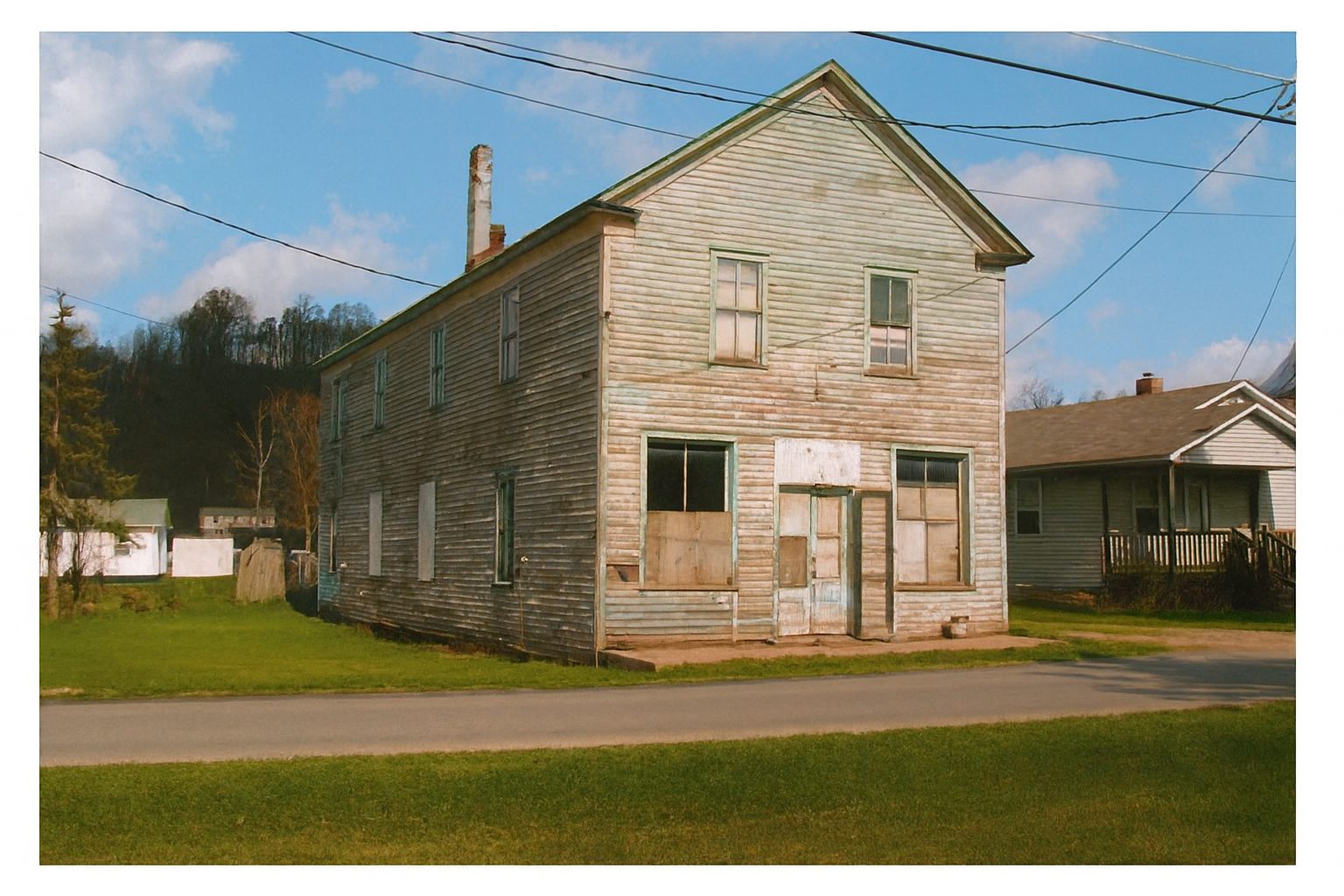
The Bank of Sugar Grove: A Brief Chapter in Local Enterprise

In the heart of Smyth County’s Rye Valley, the early 20th century brought a wave of local enterprise and ambition. Among the most notable ventures was the Bank of Sugar Grove, a short-lived but significant institution that reflected the community’s aspirations for economic growth and self-sufficiency The Bank of Sugar Grove was incorporated on October 2, 1914, with its principal office located in the Village of Sugar Grove, as recorded in Charter Book 2 at the Smyth County Courthouse. The bank’s stated purpose was broad and ambitious, encompassing the full spectrum of general banking activities: Discounting and negotiating bills of exchange, promissory notes, and drafts, Receiving deposits, Buying and selling exchange coin and bullion, Loaning money on real and personal collateral,Purchasing and selling stocks and bonds, This scope positioned the bank as a potential financial hub for local farmers, merchants, and residents seeking access to credit and investment opportunities. The bank’s capital stock was set between $10,000 and $25,000, with shares valued at $100 each. This structure reflected a modest but serious investment in the community’s financial infrastructure. Officers: R. N. Ward, President A. T. Slemp, Vice President L. L. Hutton, Secretary/Cashier Board of Directors: A. T. Slemp, Sugar Grove S. A. Meek, Sugar Grove R. N. Ward, Sugar Grove E. P. Wassum, Sugar Grove G. A. Lockhart, Rural Retreat L. H. Shumate, Rural Retreat J. S. Etter, Rural Retreat This blend of local and neighboring leadership suggests a regional vision for the bank’s role in Southwest Virginia’s economy. The bank operated from a building that once stood behind the current Sugar Grove post office. Though the structure no longer exists, its presence marked a tangible commitment to local commerce and financial independence. Despite its promising start, the Bank of Sugar Grove was dissolved on September 21, 1923. The reasons for its closure remain undocumented in the charter records, but its brief existence offers a glimpse into the challenges and hopes of rural banking in the early 1900s. While the Bank of Sugar Grove lasted less than a decade, its incorporation and operation reflect a pivotal moment in Sugar Grove’s development. It stands as a testament to the community’s entrepreneurial spirit and desire to shape its own economic future. Today, the memory of the bank lives on through courthouse records and local recollections, offering historians and residents alike a chance to reflect on the ambitions that once animated this quiet corner of Smyth County. The building later served as a meeting place for the International Order of Odd Fellows after it was used as a bank and also at one time had some apartments before falling into disrepair and eventually being torn down in the 90s.  It is estimated that this building was built in the 1920s according to some documentation but this is conflicting with the charter which states the bank was located in the community prior to this date. It stood through the mid 90s and is now an empty lot. During the time the building was being used, we know that Roy Fulton, a custodian who retired from Sugar Grove High School in 1953 , lived in one of these apartments where he made wood crafts and sold them to supplement his income during his later years. *Special thanks to County Administrator Shawn Utt and Clegg Williams for assisting in locating photos of this building. *Photo was colorized from original black and white photo dated 1997 for this article.

Bank, Business, Communities, Etter, Families, Lockhart, Meek, Odd Fellows, Organizations, Shumate, Slemp, Sugar Grove, Ward, Wassum

The History Keepers- Sena Roberts-Ward

The History Keepers- Sena Roberts-Ward

“The History Keepers” is a special series on our website dedicated to honoring those who have preserved and chronicled the stories of our region. Through their writings, collections, and memories—sometimes shared directly, sometimes lovingly submitted by their families—we celebrate the voices that have safeguarded our local heritage. One such voice belongs to Mrs. Sena Roberts-Ward. If you’re from this area, you likely knew her, heard her name spoken with respect, or admired the graceful mill she restored and tended in Sugar Grove—a quiet sentinel that still reminds us of our heritage. Mrs. Ward lived 94 remarkable years, bridging generations and bearing witness to much of the history we now study and remember. Her life overlapped with elders who themselves had lived through even earlier chapters of our community’s story. Her lineage traces directly to several of the pioneer families who settled the Rye Valley, and her deep knowledge of that legacy was matched by her high academic achievements and meticulous care for detail. We are especially grateful for the writings, photographs and memories she left behind—many of which remain unpublished, yet hold invaluable insights into our shared past. Her work is a gift to all of us, and through this series, we hope to bring it to light, honoring her dedication and the enduring spirit of those who keep history alive.  Sena Roberts-Ward was one of many who have posthumously contributed to this research and compilation of the History of the Rye Valley and here is her story transcribed from documents found in her own collection: Sena Narcissus Roberts was born February 26, 1901 in Flat Ridge, the first child of Adam Batey and Laura Elizabeth Jennings-Roberts, and the first grandchild of Charles Lafayette Jennings of Camp. She was joined by two brothers, Wiley Winton and Charles Maurice. The family grew up in Grayson and Smyth Counties. She was a graduate of Berea College in Kentucky, and did graduate work at the University of Virginia. She was one of the early home demonstration agents of Kentucky and taught high school and home economics in Mullens, WV. In 1932 she married Clarence John Ward and they were parents of two daughters, Laura Frances and Elizabeth Lavinia. She was the home economics teacher at William Flemming High School in Roanoke, and then operated the Hamm-Roberts Mill in Sugar Grove. In 1968 she retired from the Southwestern State Hospital as a dietitian and returned to Sugar Grove, where she did substitute teaching. With help from many friends, neighbors and relatives, she ran the family farm for several years. Her interests included a wide range of farming activities, from raising cattle to making molasses. She made a study of genealogy of her own family as well as others. She had a special fondness of country living, and her warm, wonderful friends and neighbors were a source of help and comfort to her during her declining hears. Although she saw several generations, she was always especially delighted with the newest generation. She maintained a joy of living almost until the very end. *We would like to extend a special thank you to Elizabeth Ward-Allison and her family for these contributions. **Photos from the Sena Roberts-Ward collection

Business, Camp, Education, Families, Genaology, History, History Keepers, Mill, Roberts, Ward