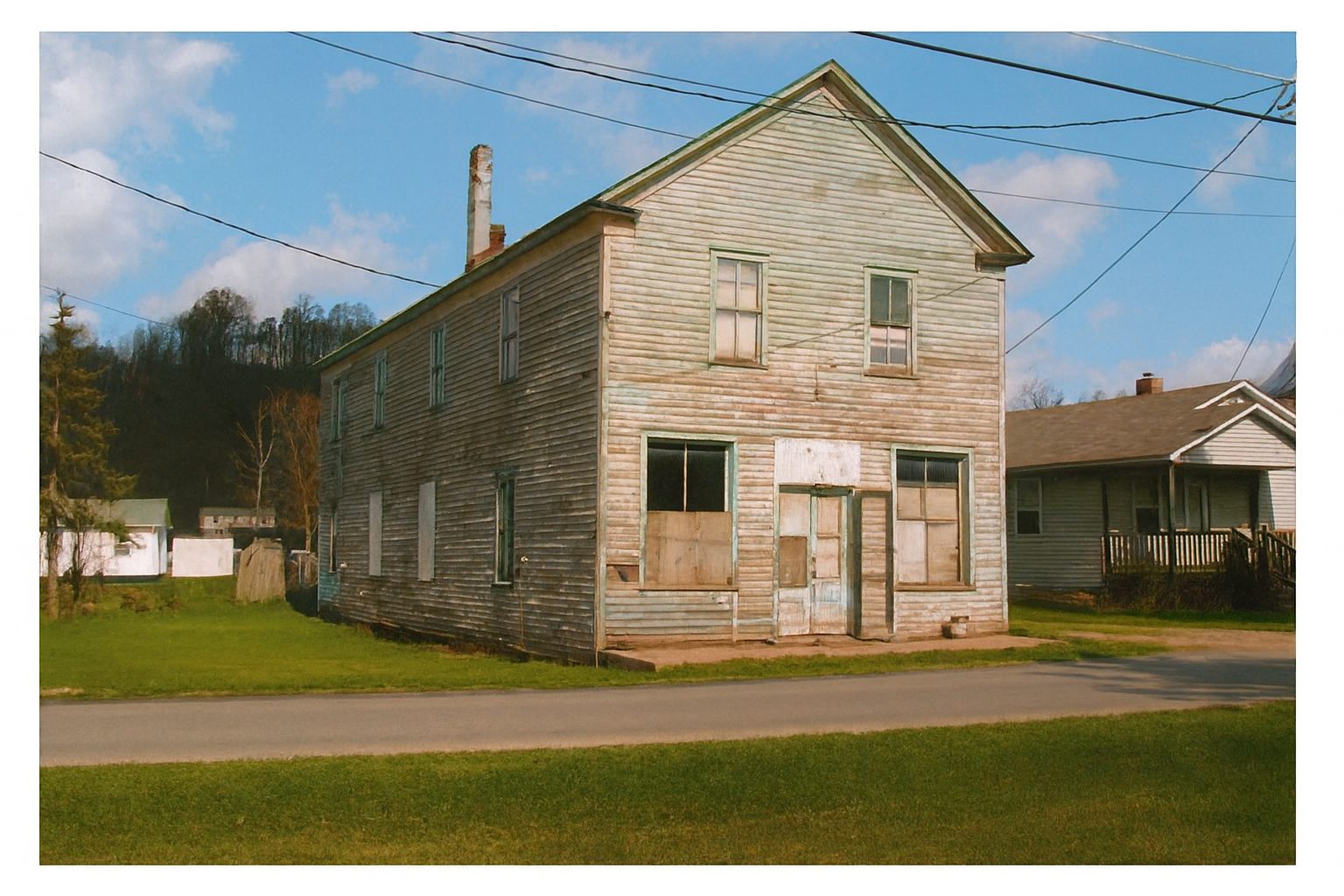
Situated just outside of Sugar Grove Virginia is the smaller community of Teas wherein lies a storied chapter of industrial history – the Teas Extract Plant. Formerly known as the Marion Extract Plant, this facility was chartered in 1910 in what is now the community of Teas, just outside of Sugar Grove. The charter was granted to the Marion Extract Company on May 20 1910, with a capital of not less than $300k or more than $600k. Officers for the first year named in the charter were W. H. Teas, President, E. M. Campbell, Vice President, both of Ridgeway, PA. Also, J.C. Campbell of Marion was named secretary and treasurer.
The Extract Company consisted of the following buildings:
Main Building 75 x 100
Engine House 40 x 75
Barreling House 40 x 100
2 Leech Houses each 50 x 250
Chipper Shed 60 x 10
Pan House 40 x 60
Machine Shop 60 x 100
12 boilers, 200 HP each
The company expected to use about 100 cords of wood each day
It was The name “Teas” was bestowed upon the area in honor of W. H. Teas, the esteemed Superintendent of the Extract Plant, who left an indelible mark on the community. Read more about the history of Teas here.
Mr. Teas, a prominent figure in the region, not only oversaw the plant’s operations but also built his grand residence in the heart of the community, a home that still stands today along Teas Road just past the church, serving as a testament to the area’s rich heritage. While the plant was in operation, it boasted its own company commissary, expertly managed by Mr. Charlie Keesling, catering to the needs of its workforce and fostering a sense of community spirit.
During its heyday, the Teas Extract Plant employed over 2000 individuals from the surrounding area, becoming a vital economic lifeline for the community. Operating with a capacity of 300,000 gallons per day, it ranked as the second-largest extract plant globally. The plant’s operations revolved around the processing of chestnut, oak, and hemlock bark, primarily for the production of tannic acid. Unfortunately, this demand resulted in a near-extinction of chestnut trees in the region, highlighting the environmental impact of the plant’s operations.
 However, as resources in the area became depleted, the fate of the Teas Extract Plant was sealed. Once its supply was exhausted, the plant was dismantled, marking the end of an era for Sugar Grove and the Rye Valley area. The community, which had thrived around the plant, witnessed changes as the small houses constructed for plant workers were eventually sold off and demolished. Several community elders have told stories over the years of going outside to watch the demolition of the smokestack and likened the blasting to fireworks. It was quite a memorable spectacle to been according to most accounts given.
The legacy of the Teas Extract Plant lives on through the memories and stories shared by residents, preserving its impact on the region’s history. The rise and fall of this industrial giant serve as a poignant reminder of the complexities of progress and the delicate balance between economic development and environmental stewardship.
As visitors explore the scenic beauty of Sugar Grove and the surrounding area, they are invited to reflect upon the legacy of the Teas Extract Plant and its enduring impact on the communities it once served. Through the contributions of individuals like Mrs. Lucille Kinkade, who graciously shared her insights, the story of the Teas Extract Plant continues to be woven into the fabric of Sugar Grove’s history, ensuring that its legacy endures for generations to come. Mrs. Kinkade shared this account 7/21/2018. She passed away at the age of 101 on May 23, 2023. Her obituary can be viewed here.