Rye Valley History

Month: March 2026

The Mysterious Disappearance of Rex Roberts Nearly 80 Years Later

The Mysterious Disappearance of Rex Roberts Nearly 80 Years Later

Nearly 80 Years After Rex Roberts Vanished, Sugar Grove Still Searches for Answers Sugar Grove, Virginia has seen its share of history, but few events have cast a longer or more haunting shadow than the disappearance of Willis “Rex” Roberts. As 2026 arrives, the mystery nears its 80th anniversary. Rex—just 17 when he vanished near Christmas of 1947—would be approaching 100 years old today. Yet not a single confirmed trace of him has ever surfaced. Rex was the son of Maurice and Bessie Roberts, a well‑known family whose roots stretched back generations in Rye Valley. Maurice was a respected farmer; Bessie, a schoolteacher at Sugar Grove, was remembered as kind, intelligent, and deeply devoted to her students. Those who knew her said the loss of her son changed her forever. Even years later, she often seemed lost in thought, carrying a grief that never healed. Rex was last seen walking home from school with a local boy—who was called simply as “Sam.” Sam continued on toward his own home, and Rex went inside the Roberts house. By the next morning, some of Rex’s clothes were missing, and Rex himself was nowhere to be found. The original written information indicates that “Sam” may not have been this individuals real name in order to protect those involved. No note. No confirmed sightings. No explanation. The Roberts home and outbuildings, later purchased by the Brunswick Corporation in the late 1960s, have long since been demolished. The land sits quiet now, offering no clues to a mystery that once consumed the entire community. In the months and years that followed, speculation spread through Sugar Grove and beyond. Some believed Rex had run away—perhaps to Texas, where a local man known as “Mr. Bob” owned a large farm, or to Maryland, where others claimed he had connections. One resident insisted he saw Rex board the “mountain bus,” though the driver denied ever selling him a ticket. Not all theories pointed to a voluntary departure. Many locals whispered that Rex and his father did not get along, and some believed an argument about a calf may have preceded his disappearance. It was even said that Rex told his father he would never see him again if he done anything with that calf.  One of the most persistent rumors suggested that Rex may have fallen—or been pushed—into a sinkhole on the family farm, a chilling possibility in an area known for unpredictable terrain. It has been said that you cannot throw a brick into that sinkhole and hear it hit the bottom. Others suspected foul play more broadly, convinced that Rex met an untimely end and that someone in the community knew more than they ever revealed. The FBI and Smyth County Sheriff’ W. Pat Jennings investigated, but no evidence emerged. The Roberts family received periodic updates from federal agents, each one reporting the same thing: nothing new to report.  This disappearance happened just as Jennings was elected to serve as Sheriff but J.V. Richardson was the current outgoing sheriff meaning that this was investigated in a transitional phase. Adding another layer to the mystery, Bessie’s own father had disappeared years earlier and was never found. Her mother is listed as the plaintiff on a divorce decree where she listed California as her ex husband’s place of residence in 1920. As decades passed, those who knew Rex personally grew older and eventually passed away, taking with them memories, suspicions, and perhaps answers. Yet among the remaining older residents, the story of Rex Roberts is not forgotten. It lingers in conversations, in local lore, and in the quiet sense that something unresolved still hangs over Sugar Grove. Nearly 80 years later, the disappearance of Rex Roberts remains one of Southwest Virginia’s most enduring unsolved mysteries. Even after all this time, we continue to search for the truth. If you have any information—family stories, old letters, secondhand accounts, or details passed down through generations—we encourage you to contact this page. No detail is too small. No memory is too insignificant. After nearly eight decades, even the faintest clue could help illuminate what happened to Rex Roberts and bring closure to a mystery that has weighed on this community for far too long. Watch the video here.
Communities, Mysteries, Roberts, Stories, Sugar Grove, Sugar Grove School

Molasses Tradition in Sugar Grove: A Generational Craft

Molasses Tradition in Sugar Grove: A Generational Craft

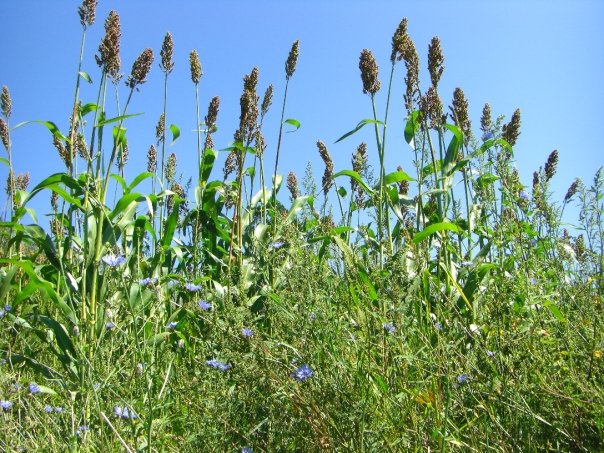
For generations in Sugar Grove, the Combs family  has carried forward a tradition that is as much about community and memory as it is about food. Making molasses was never a quick task or a solitary one — it was a season, a rhythm, and a ritual. Each step, from planting cane to sealing jars of molasses, reflects knowledge passed carefully and meticulously from one generation to the next. This is the story of how the Combs family makes molasses in the heart of Rye Valley, using tools, seeds, and methods that have endured for generations. Every batch of molasses begins long before the fire is lit under the pan. It begins in the cane patch — a field planted with seed saved from the previous year’s crop. This seed‑saving tradition is one of the most remarkable aspects of the process. Sherman Combs, Jr.  played a central role in this cycle. After the cane matured, he would walk the rows, selecting the best cane heads and carefully topping them in the harvesting process to collect seed. These seeds weren’t just agricultural material; they were heirlooms. Each year’s planting carried the genetics — and the memories — of many seasons and generations before it. This practice of “topping” the cane, gathering the heads, and saving seed ensured a consistent reliable crop, a lineage of cane adapted to Sugar Grove’s soil and climate and a direct connection between generations of farmers. Gayle Combs, the family patriarch, is shown in this photo going through the heads of the cane gathering the seeds to store for the next planting. Seeds can be stored for several years if kept dry and cool. They are usually stored in an old glass jug to prevent any moisture or other foreign matter from coming in contact with them assuring their quality. The jug has been around also for many generations.   Before any cane juice could be boiled, the custom molasses pan had to be prepared — a process that required both craftsmanship and patience. The pan is hand made and custom designed for the cane furnace using its specific measurements. The pan, typically a long, shallow metal trough, was fitted around a wooden frame. To ensure a tight seal, the pan was filled with water. As the wood absorbed moisture, it expanded, tightening around the joints and preventing leaks. Any small gaps or imperfections revealed during this stage were addressed before the pan ever touched the furnace and before any cane juice is put into it. This step is essential. A leaking pan could ruin hours of labor and waste precious cane juice. This preparation is treated as seriously as the cooking itself. The cane furnace — used not only for molasses but also for apple butter — is one of the most enduring pieces of family history. Built from stone and brick, it was designed to hold heat evenly and support the heavy molasses pan. The cane furnace is a rectangular structure built on top of the ground to form a box to contain the fire. it has a smokestack and slats across the top for added support of the pan when it is placed. The cane furnace sits under a pole shelter for added protection from weather and other elements. If it rains or is too windy, tarps can be added between poles for added protection from the weather. Before each use, the furnace has to be “mudded.” This means sealing the edges of the pan with a clay‑like mixture to prevent leaks, keep smoke and ash out of the molasses and ensure the pan heats evenly from end to end. This furnace isn’t just equipment; it is a landmark. Generations have gathered around it, stirring, skimming, talking, and working before first light until sunset. Once the cane furnace is properly made ready for the next molasses making event, the pan is placed carefully on fresh mud so that it forms a seal. Once the cane is harvested, the stalks are fed through a cane mill — a heavy, gear‑driven press that squeezes out the juice. The mill was often powered by hand, mule, or tractor, depending on the era. In modern times, a tractor is used to power the cane mill. As the stalks are crushed, the juice flows into a cloth strainer. This first filtration removed dirt, bits of cane plant matter, leaves and any other debris from the field. A fine, clean cloth sack is used for straining  for this step, ensuring the juice entering the pan from the cane mill was as pure and clean as possible. With the furnace hot and the pan sealed, the strained cane juice is poured in. This began the longest and most labor‑intensive part of the process: boiling the juice down into molasses. During this process, about half of the juice is lost to evaporation and skimming that renders a base product which becomes molasses. This stage could last many hours, often from early morning until sunset. Throughout the day, family and neighbors take turns feeding the fire, watching the boil, skimming and discarding skimmings into a nearby 5 gallon bucket. Skimmer tools are handmade from an old broom handles and metal that is hand crafted into a square scoop shape. the scoop has rows of holes so that liquid can flow through but the thicker foamy substance that rises to the surface does not pass through these holes and is discarded. These skimmers are used constantly throughout most of the process of making molasses. This process is performed along both sides of the pan for efficiency and turns are usually taken in the process by everyone. The color slowly deepens from pale green to a beautiful golden amber. The aroma — sweet, earthy, unmistakable — drifts across the yard permeating your clothes, your hair and any other material things you have while infusing everything with the scent of wood smoke mingled with molasses. It’s a unique scent only attained from this process. This…

Combs, Communities, Families, History, Sugar Grove